7 Small Entryway Organization Ideas for Apartments Without a Foyer
Plenty of apartments do not have an entryway. They have a door that opens directly into the living room, and about four feet of floor before the furniture starts.
The problem is that the entryway still exists — it just has no walls. Everyone who walks in still needs somewhere to put shoes, a coat, keys, an umbrella and yesterday’s mail. Without a designated spot, all of it lands on the nearest horizontal surface, which is usually the sofa arm or the kitchen counter. That is not a tidiness problem. It is a design problem, and it is solvable.
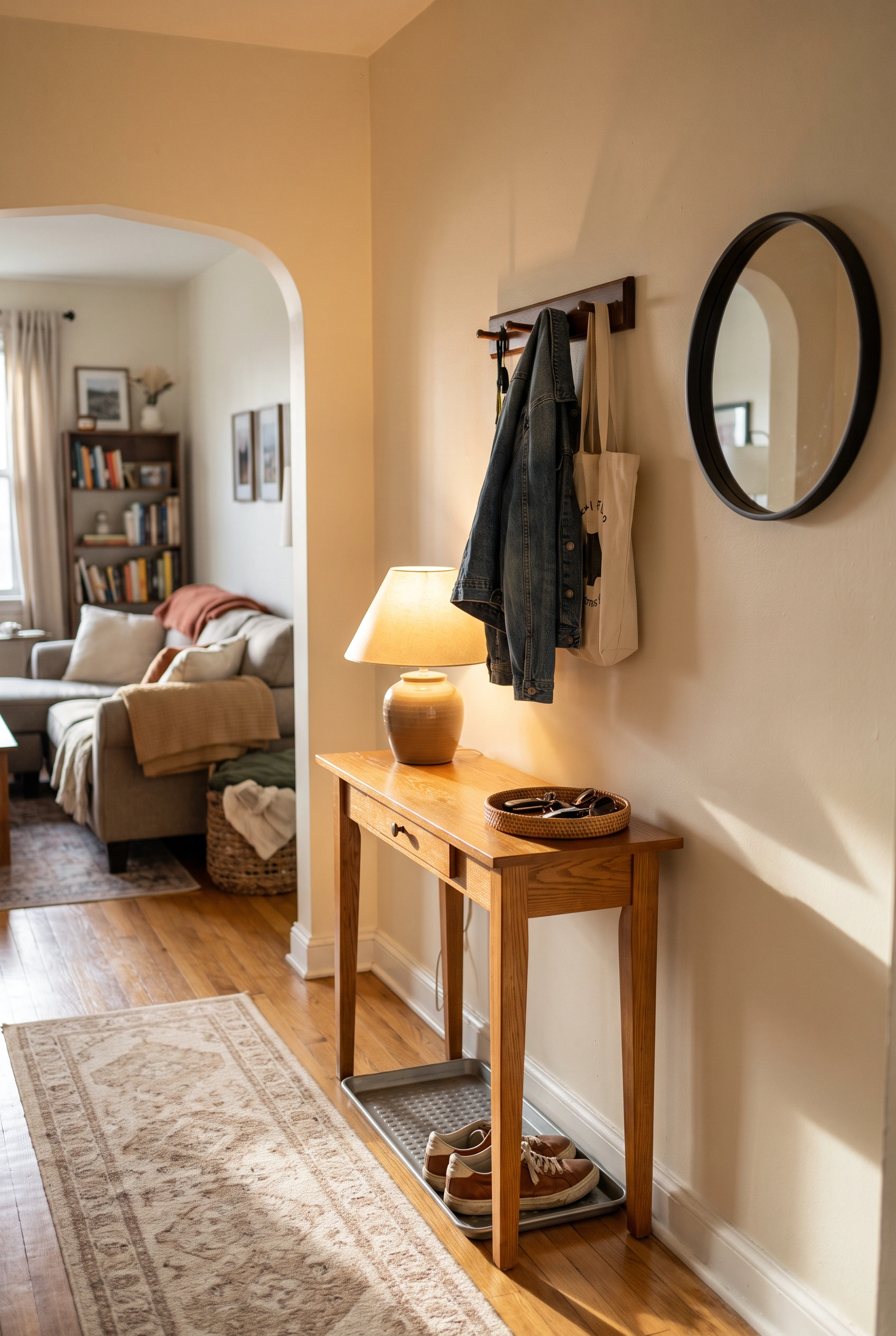
The trick is that you are not adding an entryway to the room. You are marking one out — creating a zone that reads as separate even though nothing physically divides it. These seven ideas do that, in order of how much difference each one makes.
Disclosure: This post may contain affiliate links. As an Amazon Associate I earn from qualifying purchases, at no extra cost to you.
The Quick Version
| # | The problem | What solves it | Wall space needed |
|---|---|---|---|
| 1 | There is no entryway to organize | A runner rug to define the zone | None |
| 2 | Coats end up on a chair | Wall-mounted rack with shelf | About 30 inches |
| 3 | Nowhere to set anything down | A console under 12 inches deep | About 30 inches |
| 4 | Keys disappear daily | One catchall tray | None |
| 5 | Wet shoes on the floor | A rubber boot tray | None |
| 6 | Mail piles up on the counter | Wall mail and key holder | About 16 inches |
| 7 | The zone feels cramped and dark | A round wall mirror | About 24 inches |
Before You Buy: 4 Rules for a Foyer-Less Entryway
- Measure your door swing first. The single most common mistake is buying a console or a rug that the door then hits. Open the door fully, mark where the edge lands, and work outside that arc.
- Go up, not out. In four feet of floor, anything on the ground is in the way. Wall-mounted storage costs you no floor space at all, which is why three of these seven ideas live on the wall.
- Depth is the number that matters. For a console, anything over 12 inches deep will feel like an obstacle. Ten is better. You need a surface, not a piece of furniture.
- Check your lease before drilling. Most of the wall-mounted items here can be hung with heavy-duty adhesive strips instead of screws, but weight ratings matter — a loaded coat rack is heavier than people expect.
1. Define the Zone Before You Buy Anything
Why it comes first: because everything else only works if the entryway visually exists.
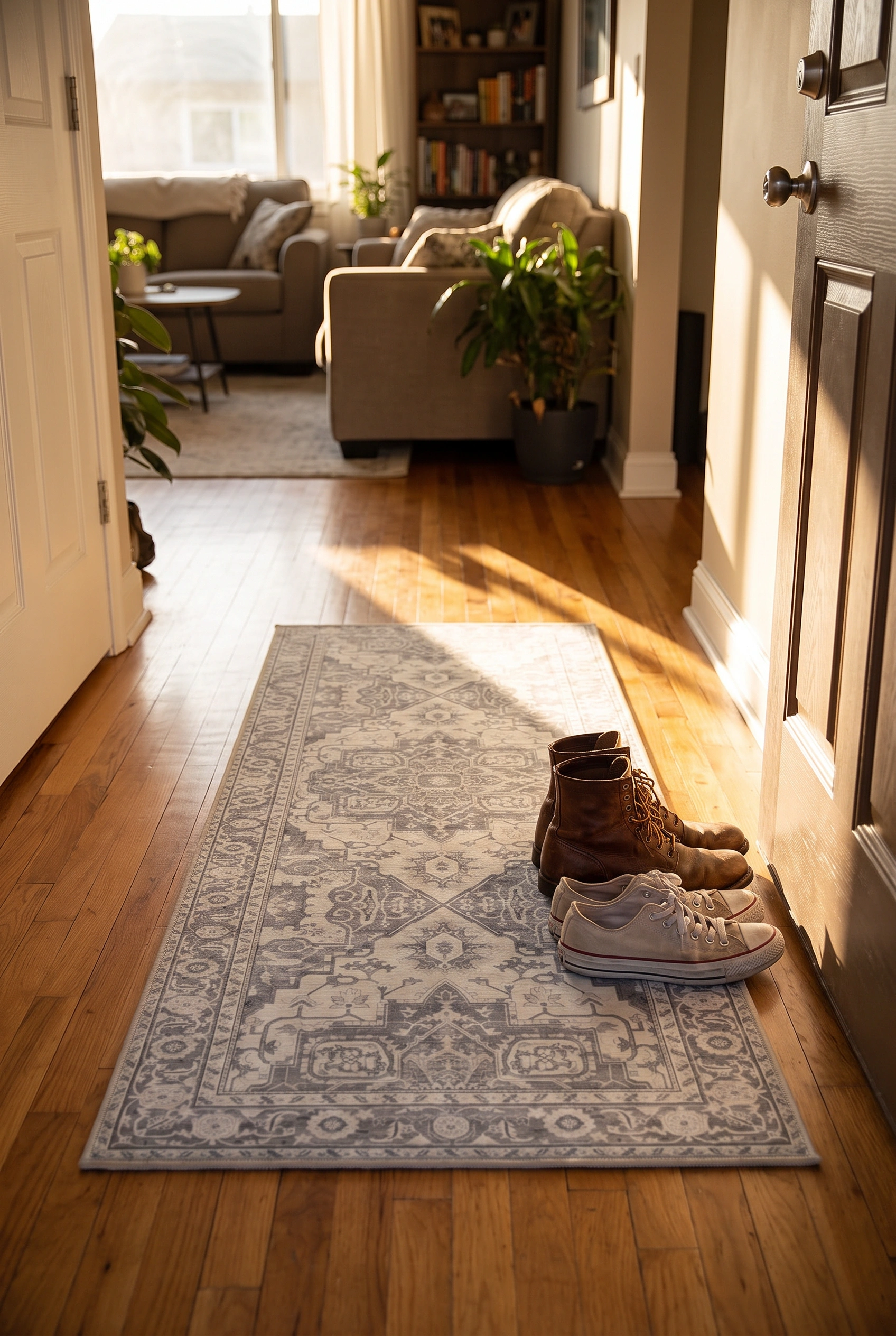
This is the idea people skip, and it is the reason a console table and some hooks can still feel like random furniture against a wall rather than an entryway. A rug does something no other object does: it draws a boundary. The floor inside it reads as one room, the floor outside it reads as another, and suddenly there is a place where shoes and bags obviously belong.
A washable runner rug in roughly 2 by 6 feet handles most apartment entry zones. Washable is not optional here — this is the piece of textile in your home that takes the most dirt, and being able to put it in a machine is what determines whether you keep it.
Two sizing notes. Check the thickness against your door clearance before ordering; a low-pile runner will clear most doors, a thick one will not. And run it parallel to the wall your hooks and console will go on, not perpendicular, so the zone reads as a strip rather than a path leading away.
→ Check the Washable Runner Rug on Amazon
2. Get the Coats Onto the Wall
What it solves: the chair, the sofa arm, or the bedroom door handle that is currently doing this job.
Coats need to hang somewhere within about three steps of the door, or they will not get hung. A freestanding coat rack works but eats a square foot of the little floor you have and tips over the moment three coats end up on one side.
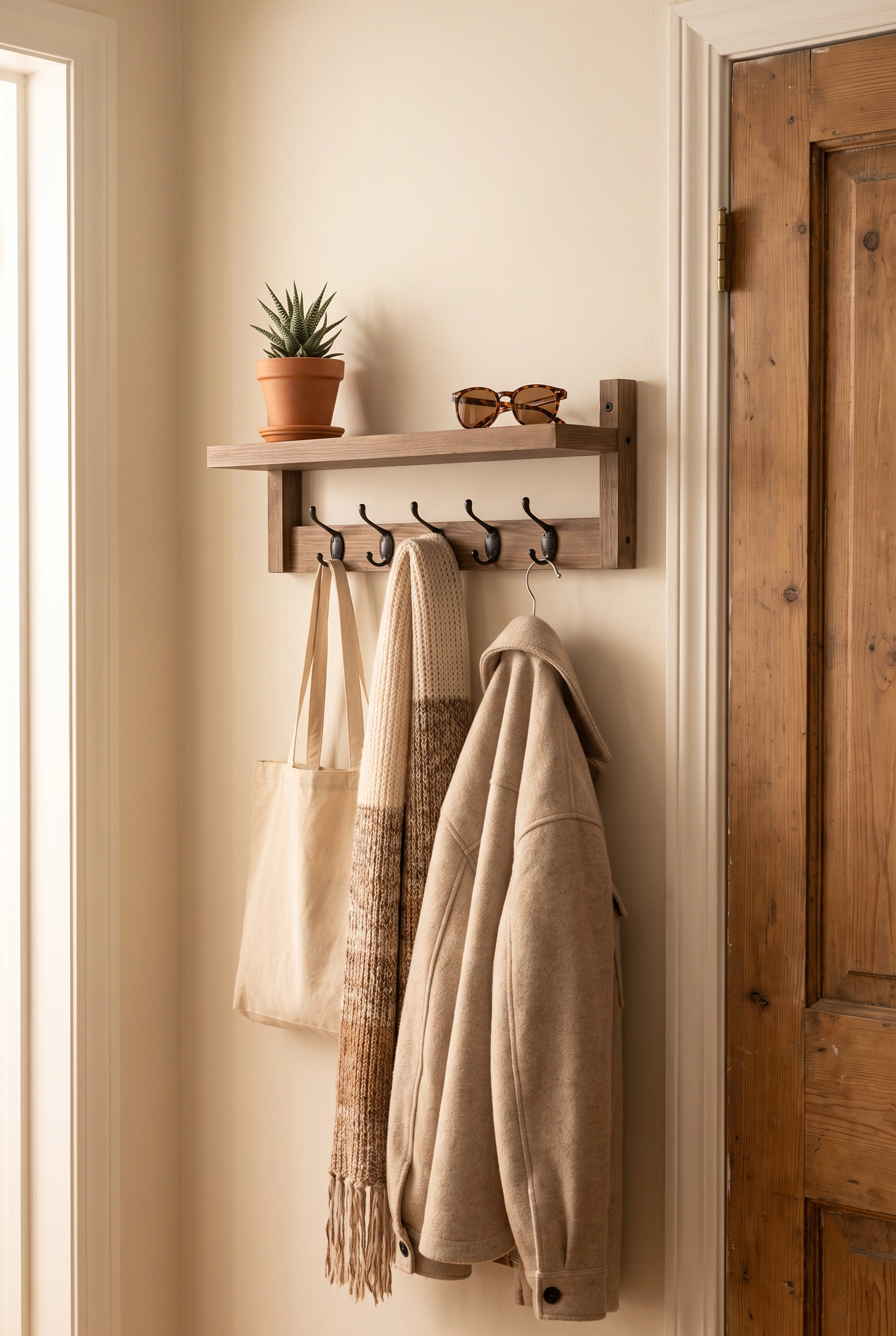
A wall-mounted rack with a shelf does the same job with zero footprint. The AMBIRD 28.9-Inch Coat Rack with Shelf has five double hooks and a top ledge, so it handles coats and bags below and sunglasses, a small plant or a set of keys above.
Mount it at around 60 to 66 inches from the floor. Any higher and coats drag; any lower and long coats pool on the ground. And leave at least one hook permanently empty — the rack that is completely full is the one where guests hang their coat over yours and everything slides off.
→ Check the AMBIRD Coat Rack on Amazon
3. Add a Surface — But Keep It Under 12 Inches Deep
What it solves: the problem that there is nowhere to set anything down while you take your shoes off.
You need one horizontal surface near the door. Not for storage exactly — for the thirty seconds between walking in and putting things away. Without it, keys and mail go straight to the kitchen counter and stay there.
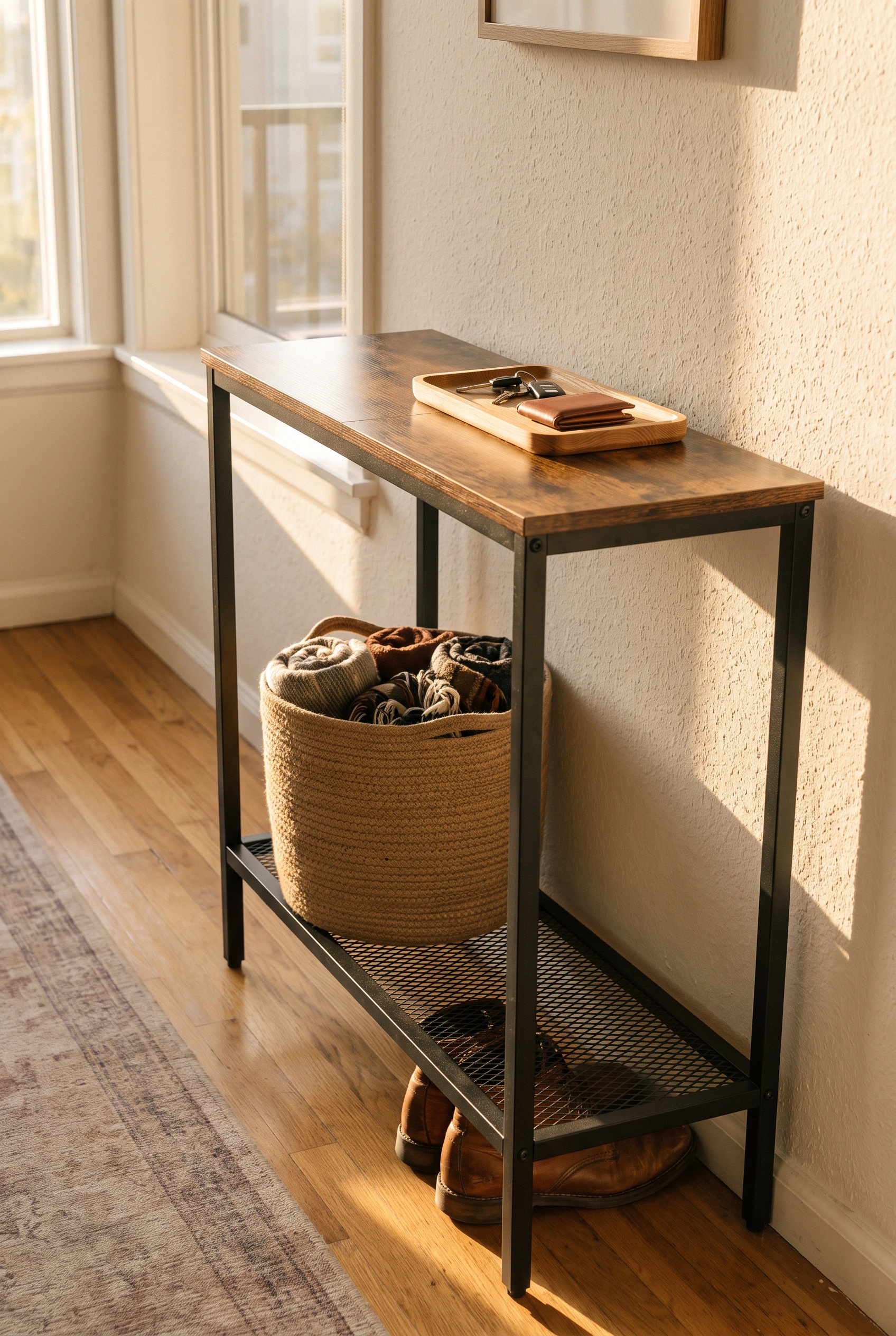
The HOOBRO 29.5-Inch Narrow Console Table is the right proportion for this. It is slim enough that it does not read as a piece of furniture blocking the room, and the open lower shelf gives you somewhere for a basket or a pair of shoes without adding visual bulk.
Measure twice on this one. The depth plus your door swing plus a person walking past needs to still leave a usable path — roughly 30 inches of clear floor. If it does not, skip the console and go with a deep floating shelf at waist height instead. Same function, no legs.
→ Check the HOOBRO Narrow Console Table on Amazon
4. Give Keys and Wallet Exactly One Bowl
What it solves: the daily two minutes of looking for your keys, which is a surprisingly large fraction of the reason mornings feel chaotic.
The rule that makes this work is one. Not a tray in the entry and a bowl in the kitchen and a hook in the bedroom. One designated landing spot, and everything small that comes in with you goes into it, every time, without exception, until it becomes automatic.
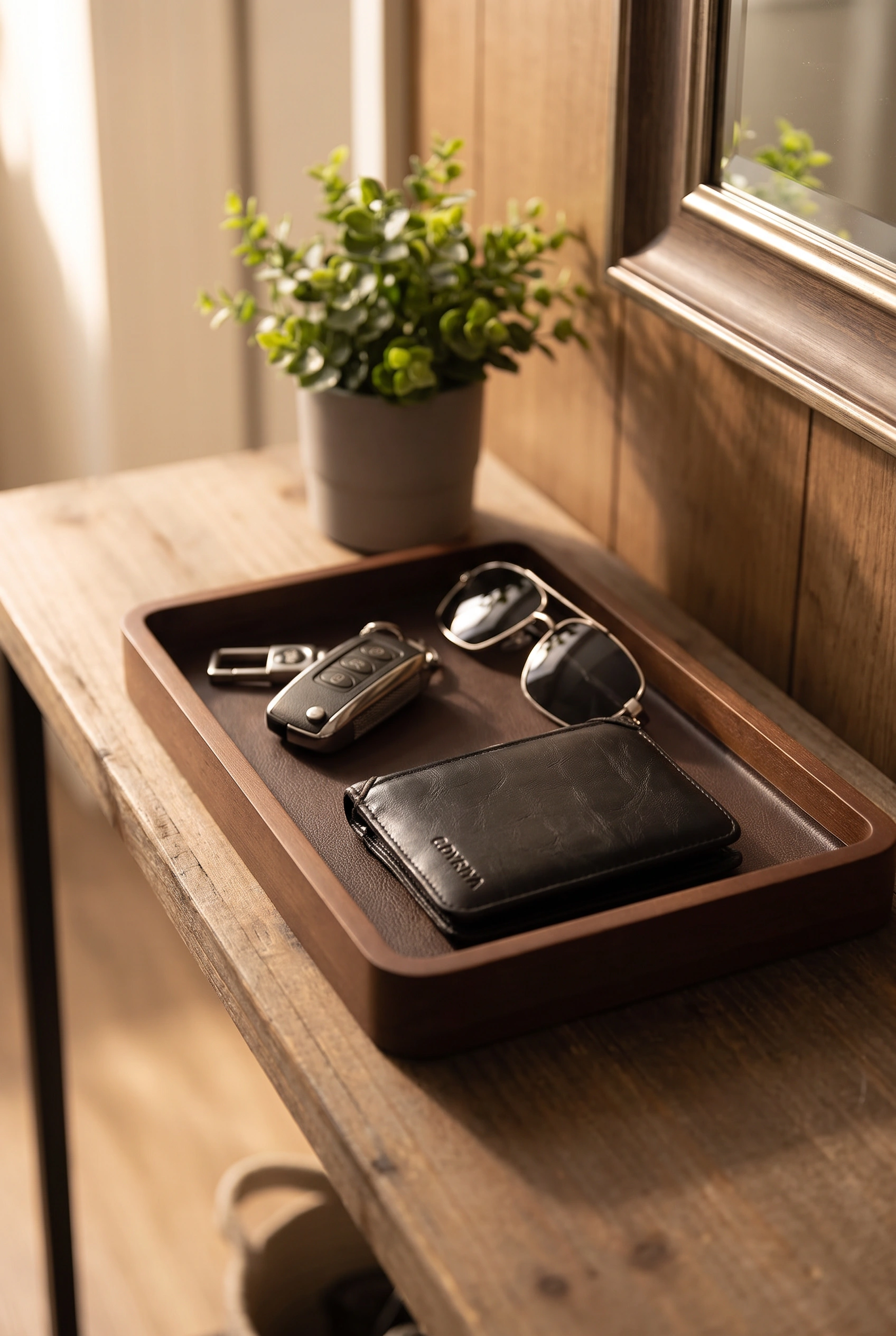
A wooden valet tray on the console does the job better than a bowl because the flat base and low sides mean you can see everything at a glance instead of digging. Keys, wallet, sunglasses, transit card, earbuds.
Keep it small on purpose. A large tray becomes a surface, and a surface accumulates. If it is only big enough for the four things you carry daily, it stays functional. Anything that does not fit is a signal that it belongs somewhere else.
→ Check the Wooden Valet Tray on Amazon
5. Contain the Wet Shoes
What it solves: the puddle, the salt stains, and the slow migration of shoes across the living room floor.
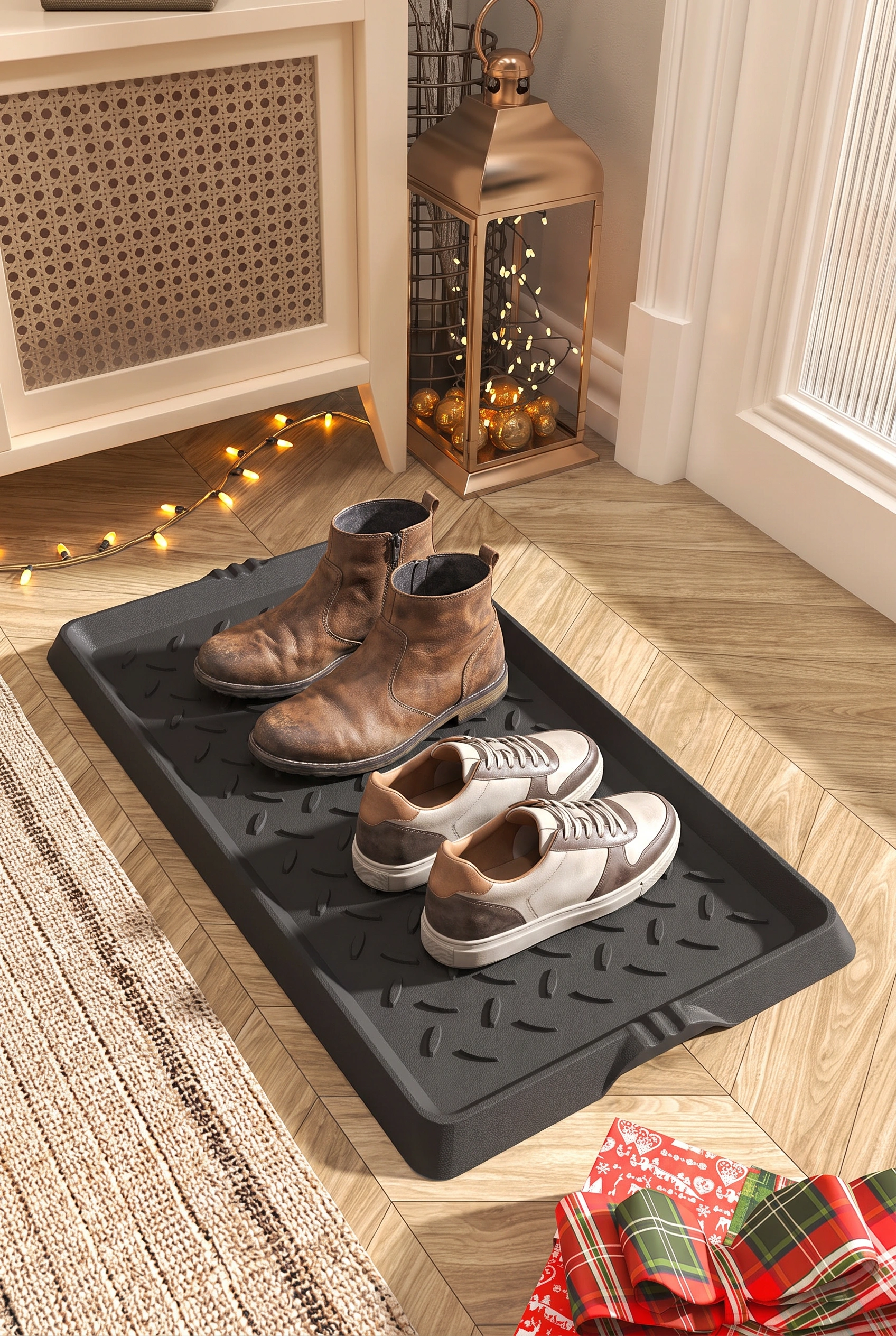
From October onward, shoes come in wet. Without somewhere obvious for them to go, they get kicked off wherever the person is standing, which is directly in the walking path. A boot tray fixes both problems at once — it protects the floor and, more importantly, it tells everyone where shoes belong.
A rubber boot tray at roughly 16 by 27 inches holds two or three pairs. Rubber over plastic is worth it: plastic trays crack when someone steps on the edge, and rubber has enough weight not to slide when you pull a boot off.
Slide it under the console if the console has clearance, or place it at the end of the runner rug. Two pairs per person maximum on the tray — everything else goes to actual shoe storage, which is a separate problem with a separate set of solutions.
→ Check the Rubber Boot Tray on Amazon
6. Stop the Paper Pile Before It Starts
What it solves: the stack of unopened mail that lives on the counter for three weeks and then gets sorted in a panic.
Mail is the entryway problem nobody plans for. It arrives daily, it is 90 percent recycling, and it gets set down “for now” on whatever surface is closest. Within a week that surface is unusable for anything else.
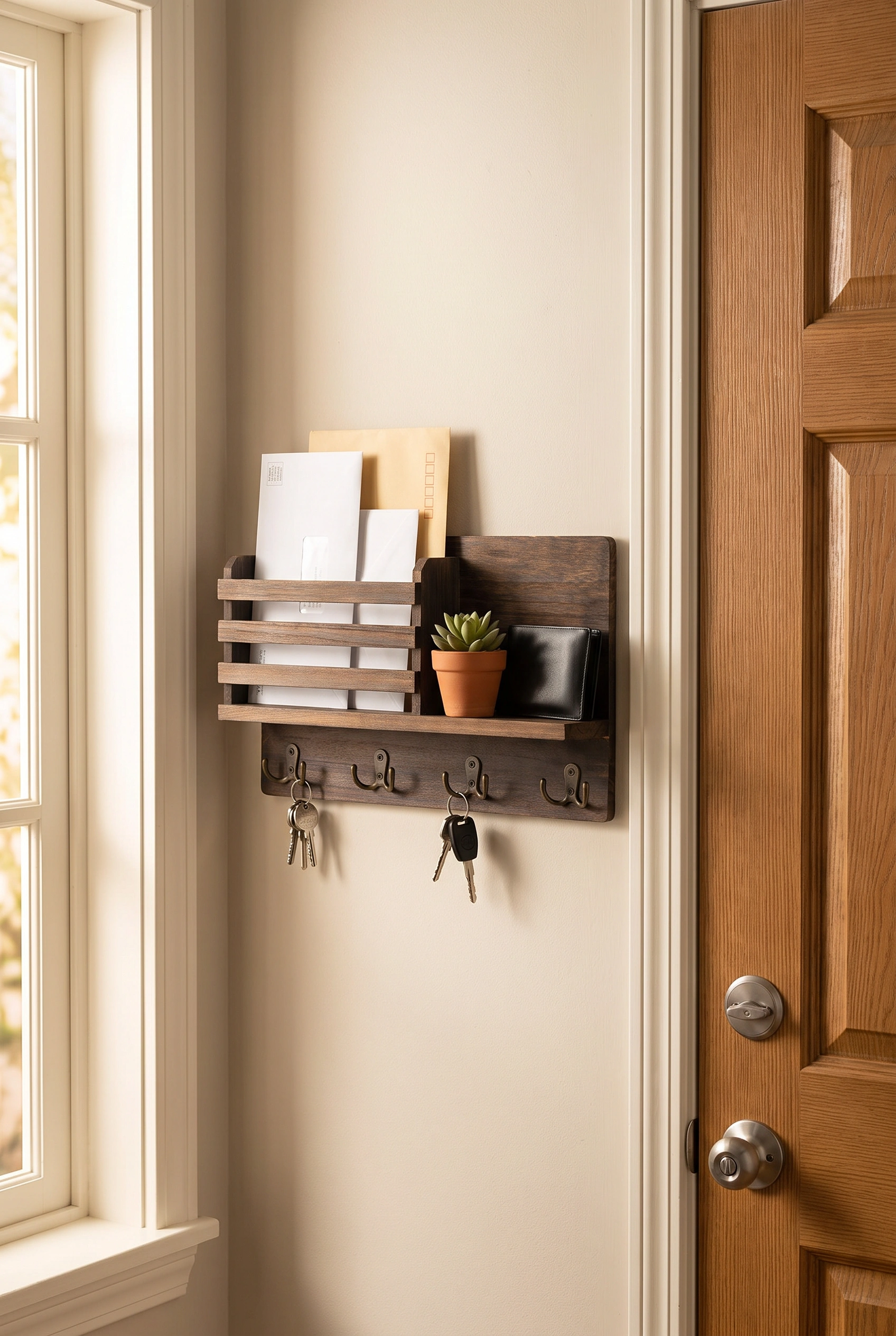
A wall-mounted mail and key holder with a slot and hooks solves it by giving mail a vertical home instead of a horizontal one. Vertical storage cannot be piled on, which is exactly the point.
Pair it with a rule rather than a system: recycling gets sorted at the door, before you take your coat off. Everything that survives goes in the slot. Then the slot gets emptied once a week — put it in your calendar for the first month until it sticks. A mail holder that never gets emptied is just a smaller, tidier pile.
→ Check the Mail and Key Holder on Amazon
7. Hang a Mirror — For Three Reasons, Not One
What it solves: the last-look problem, the light problem, and the “this corner feels cramped” problem, all at once.
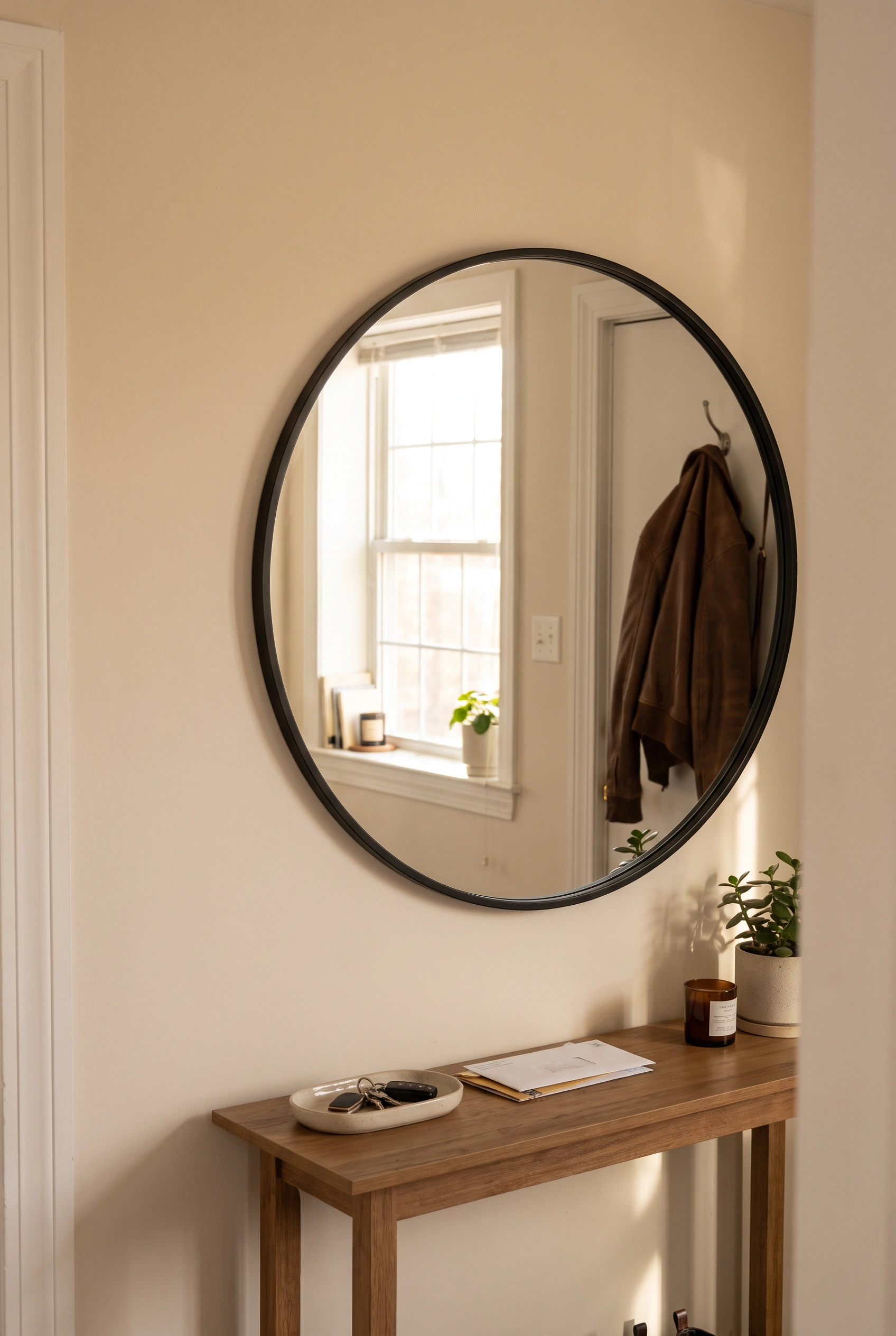
The obvious reason for an entryway mirror is checking yourself before you leave. That alone justifies it. But in an apartment with no foyer, a mirror is doing two more useful jobs: it reflects light back into what is usually the darkest corner of the room, and it visually doubles the depth of a zone that is only four feet deep.
A 24-inch round mirror with a black metal frame suits this well. Round is the right choice here rather than rectangular — in a corner full of straight lines (door frame, console edge, rug edge, coat rack), a circle breaks the grid and stops the zone from reading as boxy.
Hang it so the center sits around 57 to 60 inches from the floor, and if you can, position it to reflect a window or a lamp rather than a blank wall. That is where the light-bouncing benefit actually comes from.
→ Check the Round Wall Mirror on Amazon
The Order to Do This In
Sequence matters here because the rug sets the boundaries that everything else sits inside.
- Open the door fully and mark the swing. Everything gets placed outside that arc. Do this before you order anything.
- Put the rug down first, even if it is a temporary one, and live with it for two days. It tells you exactly how much usable zone you actually have.
- Mount the coat rack and mirror while the floor is still clear. Both are easier to position when nothing is in the way.
- Add the console last of the furniture, so you can see how much floor is genuinely left.
- Place the tray and boot tray, then use the setup for a week.
- Add the mail holder only if the paper problem is still there. For some households it is not, and an unused organizer on the wall is just clutter with better branding.
If the entry zone shares a wall with a desk or study corner — which is common in studios — these small desk setup ideas use the same wall-first logic and the two setups can share a visual language.
Small Entryway Questions People Actually Ask
How do you create an entryway when there is no entryway? With a rug and a wall. The rug marks the floor zone, and a coat rack or console on one wall gives it a function. Those two things together are enough for the space to read as an entryway, even with no walls dividing it from the living room.
How deep should an entryway console be? Ten to twelve inches for a small apartment. Deeper than that and it starts obstructing the path from the door. If you need more surface, go longer rather than deeper.
What if I cannot drill into the walls? Most of this works with heavy-duty adhesive strips — the mail holder, the mirror, and lighter hook rails. Be realistic about the coat rack, though: a loaded rack with three winter coats is heavy, and adhesive failures with a mirror are worse than a hole in the wall. Check weight ratings honestly.
Where do shoes go if I have no closet by the door? A boot tray handles the two pairs in active rotation. Everything else needs proper storage elsewhere — a bench with storage under it works well if you have the wall space, since it also solves the problem of nowhere to sit while taking shoes off.
How do I keep the entryway from getting cluttered again? One landing spot per category, and a weekly reset. The tray is for small carried items, the hooks are for outerwear, the tray on the floor is for shoes, the slot is for mail. Anything that does not fit one of those four is a signal it belongs in another room.
Final Thoughts
The reason a foyer-less apartment feels chaotic at the door is not that you own too much. It is that four feet of undefined floor cannot tell anyone where anything goes.
Put a rug down and hang some hooks and the zone starts working almost immediately — usually before you have bought anything else on this list. The rest is refinement.
Product availability, colors, dimensions, and included components may change. Check the current Amazon listing and measure your door swing before ordering, and confirm weight ratings before mounting anything with adhesive rather than screws.
Small shifts, big vibes.