7 Small Desk Setup Ideas for Studying in a Tiny Bedroom
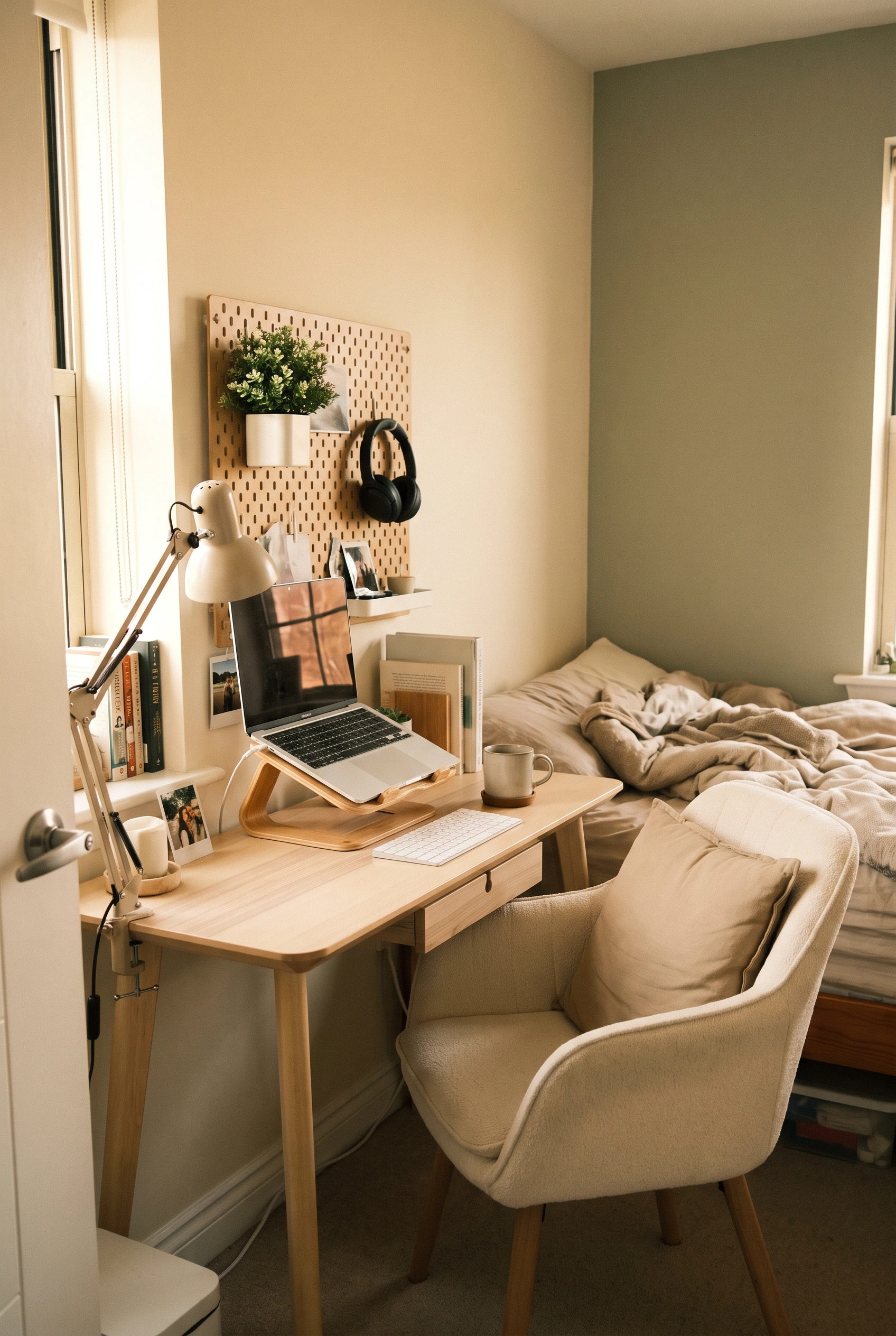
Most desk advice assumes you have a room for the desk. In a small bedroom, the desk has to live inside a space that is already doing three other jobs — sleeping, storing clothes, and being the only place you exist between classes or between meetings.
That changes what actually works. A wide desk is useless if it blocks the closet door. A pretty lamp is useless if it takes up a quarter of the surface. And the real enemy in a small setup is almost never the desk itself — it is the slow creep of chargers, notebooks, mugs and cables that turns a workspace into a shelf you happen to sit at.
These seven ideas are ordered by impact. Each one either frees up desk surface or moves something off the desk entirely, and every single one is renter-friendly — no drilling required unless you want to.
Disclosure: This post may contain affiliate links. As an Amazon Associate I earn from qualifying purchases, at no extra cost to you.
The Quick Version
If you are building the setup from scratch, this is the order that saves the most regret.
| # | The problem | What fixes it | Frees up |
|---|---|---|---|
| 1 | The desk eats the room | A narrow-depth desk | Floor space |
| 2 | Overhead light is wrong for reading | A clamp-on desk lamp | Desk surface |
| 3 | Neck strain and lost surface | Monitor or laptop riser with storage | Desk surface |
| 4 | Nothing has a home | Renter-friendly wall pegboard | Desk surface |
| 5 | You cannot sit for two hours | Seat and lumbar cushion set | Your back |
| 6 | Cable nest under the desk | No-drill under-desk cable tray | Floor space |
| 7 | Small things everywhere | Interlocking drawer trays | Drawer space |
Before You Buy: 4 Small-Desk Rules
- Depth matters more than width. A 16-inch-deep desk feels dramatically smaller in a room than a 24-inch one, and for a laptop it is still plenty. Measure the depth of the space first.
- Anything that clamps beats anything that stands. Lamps, pegboards, cable trays, monitor arms — clamping moves the footprint off your working surface.
- Check what your walls allow. Renting or in a dorm? Look for adhesive-mount versions rather than drilled ones. Almost everything here has both options now.
- Leave one third of the desk empty on purpose. Not as a rule about minimalism — as a functional working area. A desk with no clear zone stops being a desk within about a week.
1. Start With Depth, Not Width
What it frees up: floor space, and the ability to open a closet or a door.
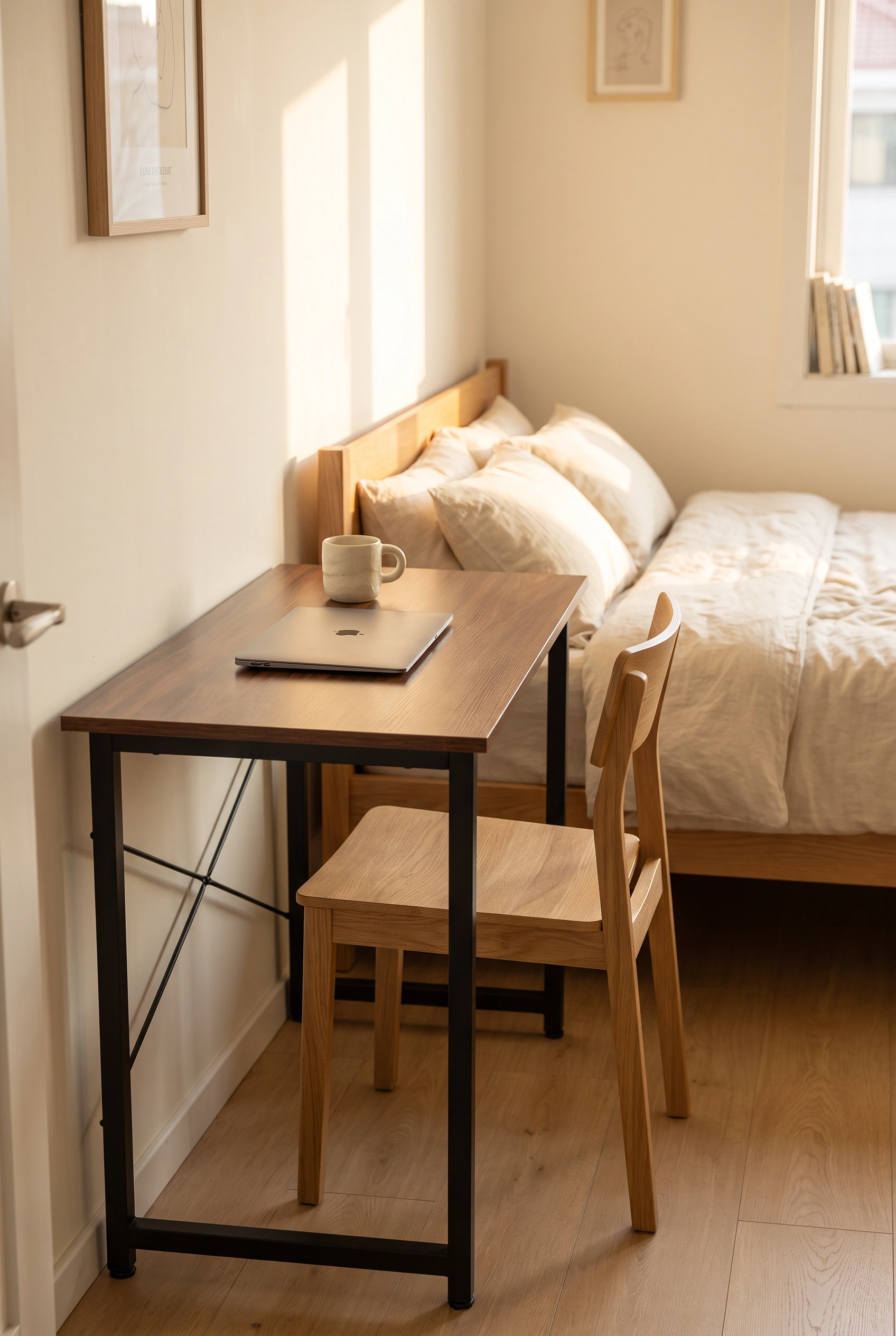
The single biggest mistake in a small bedroom is buying a desk based on how much surface you want rather than how much room the desk takes out of the space. A standard office desk is 24 to 30 inches deep. Pushed against a wall in a small bedroom, that projects almost three feet into the room — usually right into the walking path between the bed and the door.
The ODK 32-Inch Small Desk is about 15.7 inches deep and 31.5 inches wide, which is the sweet spot for a laptop setup. It includes a headphone hook and a side storage bag, which sounds like a minor detail until you realize both of those are things that would otherwise live on the desk surface.
Measure before you order: the width of the wall space, the depth you can lose without blocking a path, and the height of anything you plan to slide underneath. If you are between two sizes, take the narrower one. You will notice the extra floor space every day, and you will notice the extra four inches of desktop almost never.
→ Check the ODK Small Desk on Amazon
2. Light the Desk, Not the Room
What it frees up: the corner of the desk a table lamp would occupy.
Overhead bedroom lighting is designed to make a room feel warm, not to make text readable. If you have ever found yourself squinting at a screen at 10 p.m. and blaming your eyes, it is usually the lighting.
A clamp lamp solves two problems at once. It puts adjustable, directional light exactly where you are working, and it attaches to the edge of the desk instead of sitting on it. On a 32-inch desk, that difference is real — a table lamp base can eat 20 percent of your usable surface.
This LED Desk Lamp with Clamp has a swing arm, three color temperatures, and ten brightness levels with a memory function. The color modes matter more than the marketing suggests: cool white for reading and problem sets, warm for evening, and something in between for everything else.
Position it so the light comes from the side opposite your writing hand. Light from directly above a screen creates glare, and light from your dominant side means you write in your own shadow all evening.
→ Check the Clamp Desk Lamp on Amazon

3. Get the Screen Up and Reclaim What Is Underneath
What it frees up: roughly a full keyboard’s worth of desk surface, plus your neck.
Working on a laptop flat on a desk puts the screen about a foot below where your eyes naturally rest. Over a long study session that is the difference between finishing comfortably and finishing with a headache.
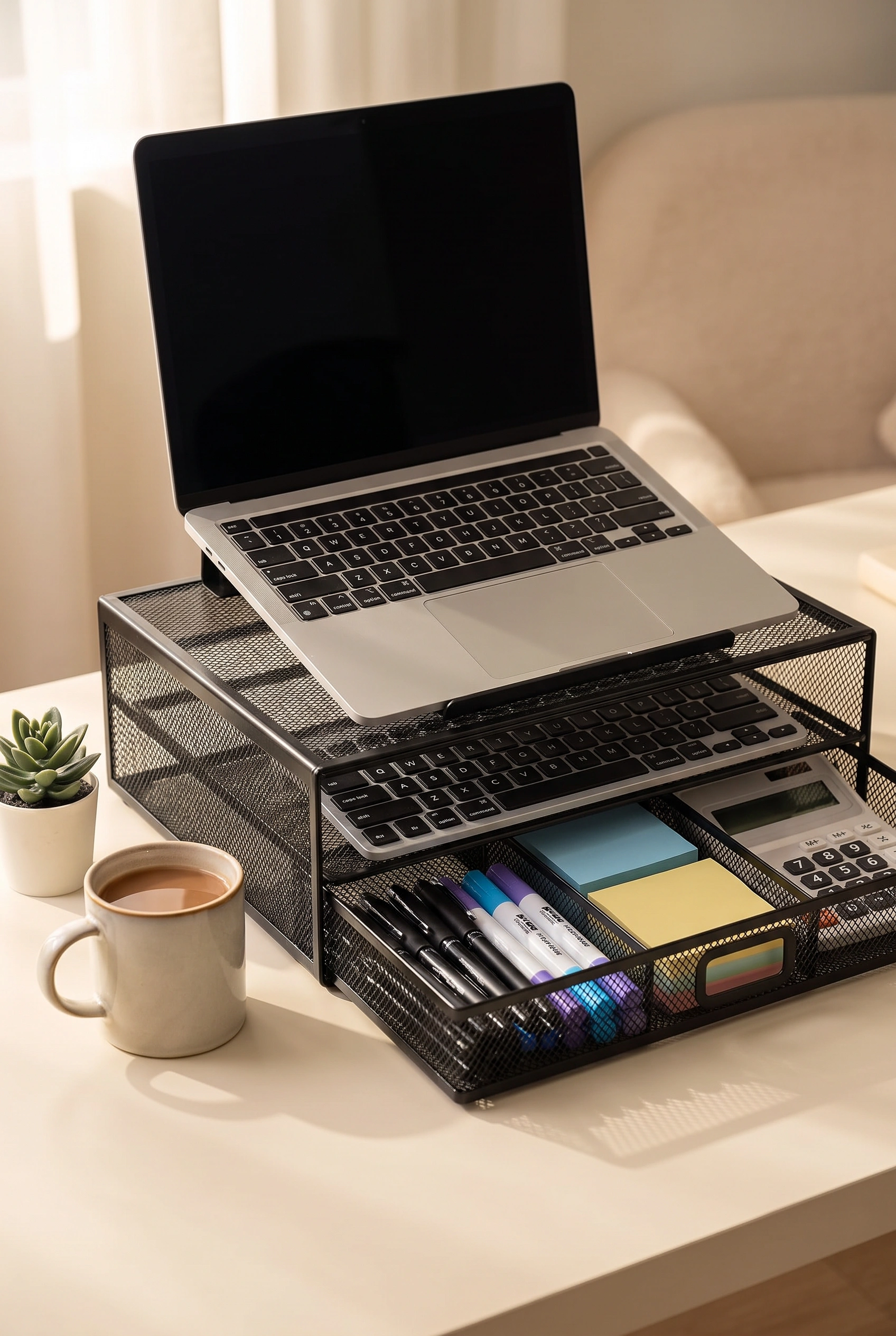
The fix is a riser, and the reason it belongs on a small desk list is what happens underneath it. The HUANUO 2-Tier Monitor Stand with Drawer lifts the screen to eye level and creates a shelf beneath it where your keyboard, notebooks and small items slide out of sight. The pull-out drawer takes the category of stuff — pens, sticky notes, chargers — that otherwise migrates across the whole desk.
If you are on a laptop rather than a monitor, you will need an external keyboard to make this work. That sounds like an added cost, but it is the piece that actually makes the ergonomics correct, and a slim keyboard tucks under the riser when you are not using it.
→ Check the HUANUO Monitor Stand on Amazon
4. Move the Storage Onto the Wall
What it frees up: the back third of the desk, which is where clutter accumulates.
Look at any messy desk and you will notice the mess is mostly against the wall — the row of things pushed backward to make room for the thing you are actually doing. That back strip is storage, it is just bad storage.
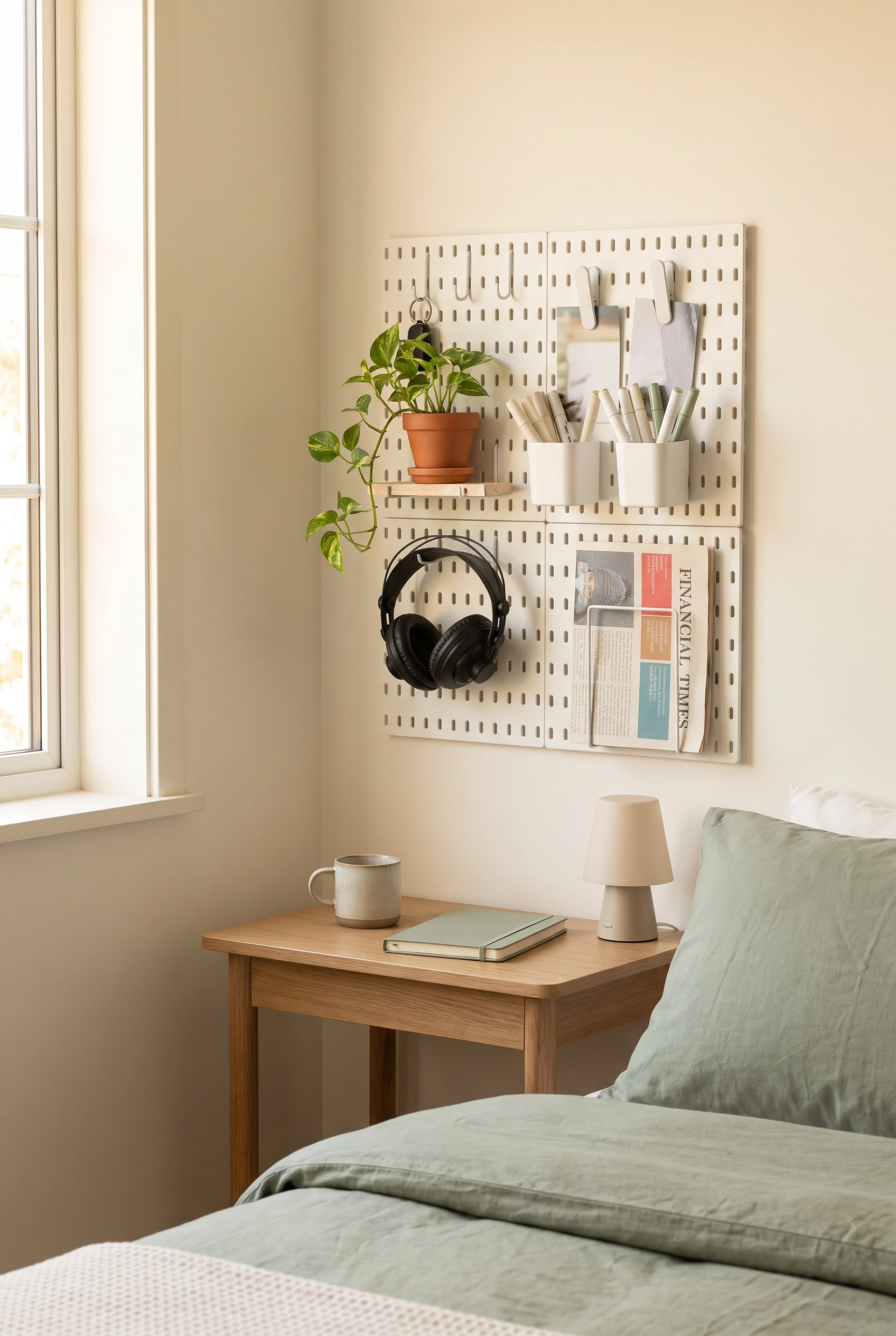
A pegboard turns it into good storage. The MULSAME Pegboard Combination Kit is a 22 by 22 inch modular set with four panels and fourteen accessories, and — this is the part that matters if you rent — it mounts with adhesive strips rather than screws. Hooks, small shelves and bins reposition in seconds as your setup changes.
Hang it directly above the desk at roughly eye level when seated. Put the things you reach for daily on hooks, the things you reach for weekly on the small shelves, and resist decorating it heavily at first. A pegboard that is half full stays useful. A pegboard that is fully decorated becomes a wall of visual noise you stop seeing.
→ Check the MULSAME Pegboard Kit on Amazon
5. Fix the Chair Before You Fix Anything Else
What it frees up: nothing physical — but it is the reason the desk gets used at all.
This is the idea people skip, and then wonder why they keep migrating to the bed with their laptop. In a small bedroom the chair is usually whatever came with the desk or the room: hard, flat, and impossible to sit in for more than forty minutes.
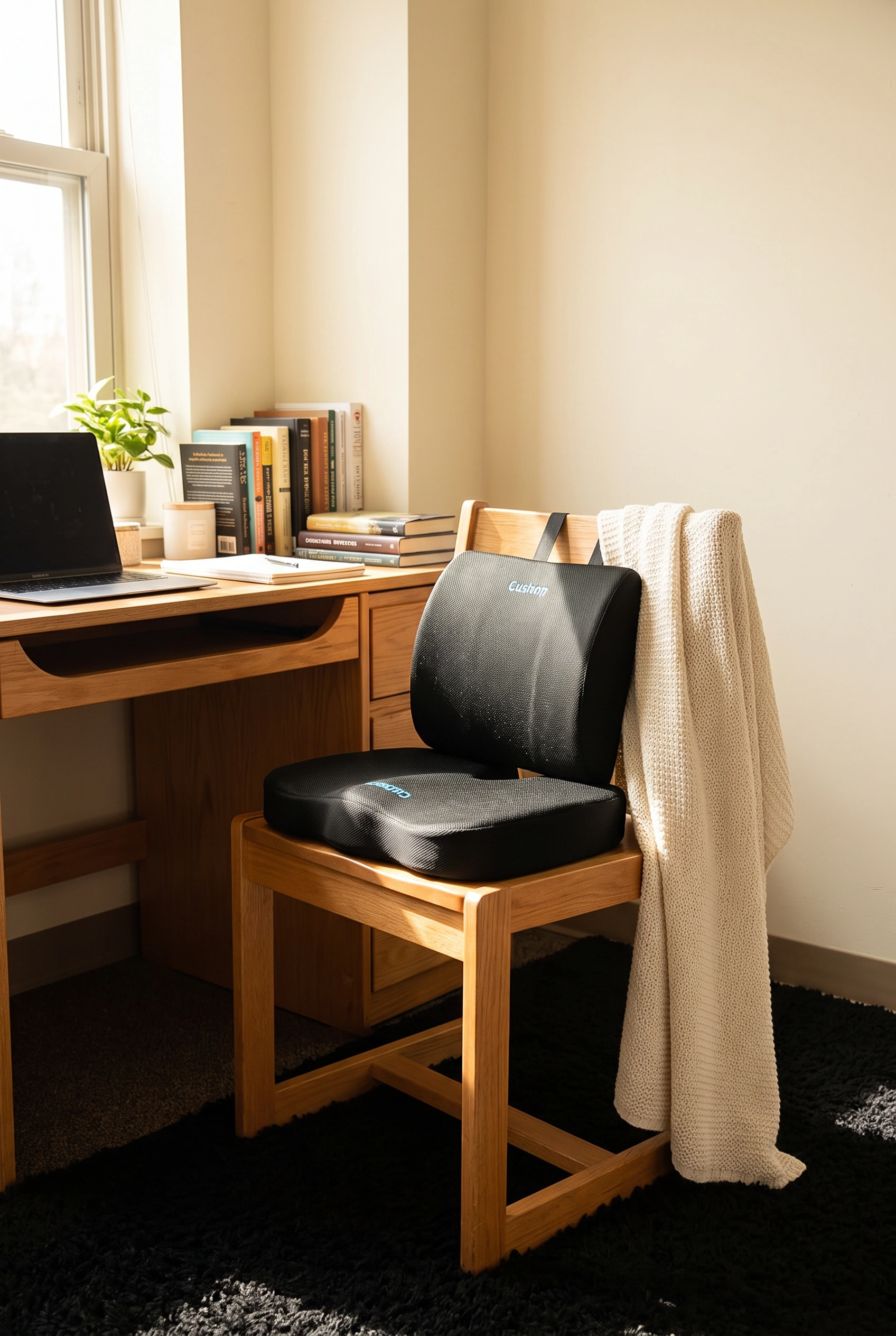
A seat cushion and lumbar support set is the cheapest possible upgrade to a bad chair. The seat cushion takes pressure off your tailbone on a hard surface, and the lumbar pillow fills the gap between the chair back and your lower spine, which is what causes the slow slide into a slouch.
Two practical notes: look for non-slip backing and straps, because a cushion that slides is worse than no cushion, and remember that adding a seat cushion raises you an inch or two. If your desk was already slightly low, check that your forearms still sit roughly parallel to the floor afterward.
→ Check the Seat and Lumbar Cushion Set on Amazon
6. Get the Cables Off the Floor
What it frees up: the visual space under the desk, which affects how big the whole room feels.
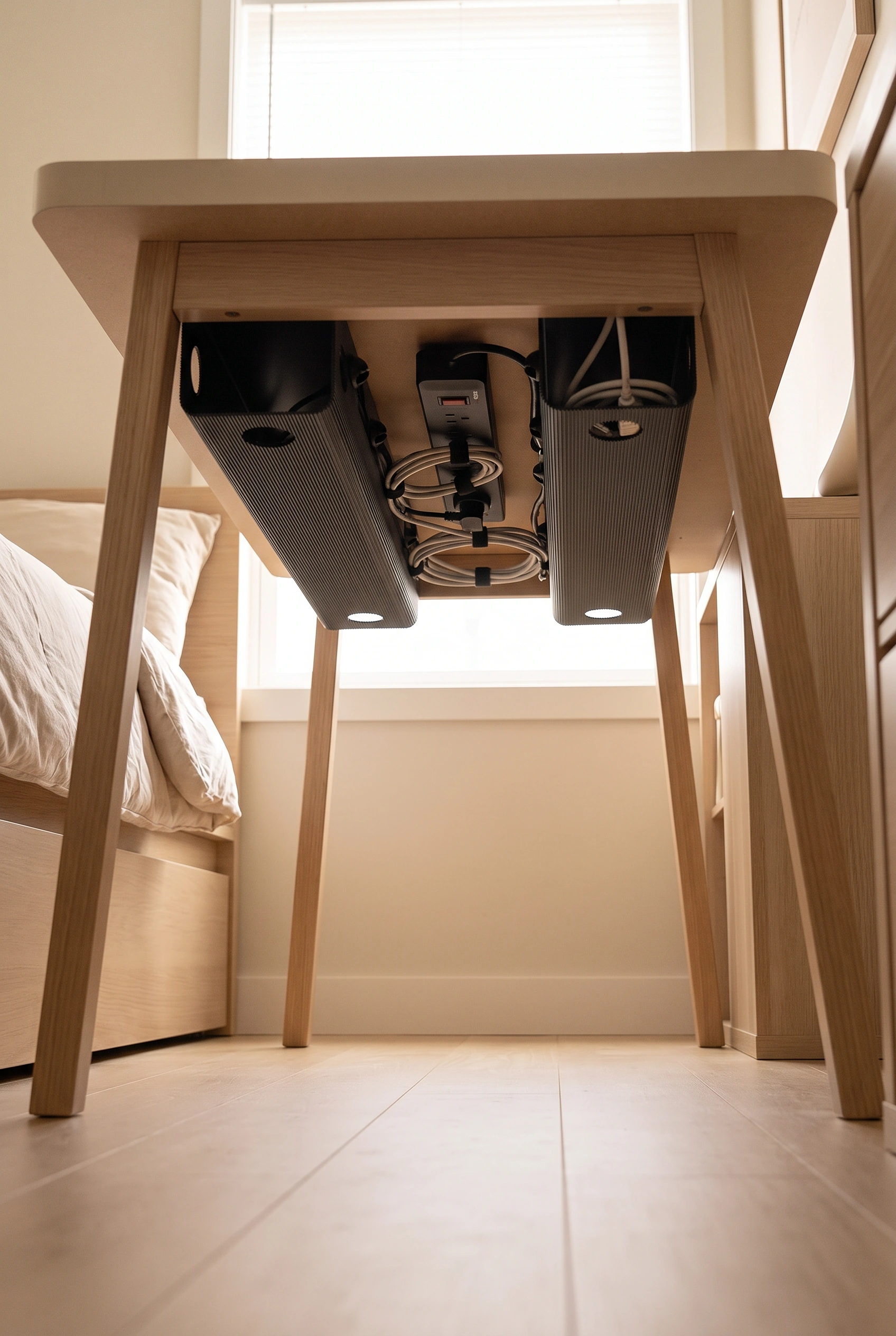
In a small bedroom you see under the desk constantly, because there is nowhere to stand that hides it. A power strip on the floor with six cables draped toward it makes the room read as cluttered even when the desk surface is spotless.
The Delamu Under Desk Cable Management Tray comes as a two-pack and installs with adhesive tape or screws, so it works on a rented desk you do not want to drill into. The power strip, the laptop brick and the excess cable length all go inside, and the floor underneath becomes empty again.
Two things that make this actually work: let adhesive-mounted trays cure for a couple of hours before loading them, and route the cables first, then mount the tray. Trying to thread cables into an already-attached tray while lying on the floor is a genuinely unpleasant twenty minutes.
→ Check the Delamu Cable Tray on Amazon
7. Give the Small Things a Fixed Home
What it frees up: the drawer you already have but currently cannot use.
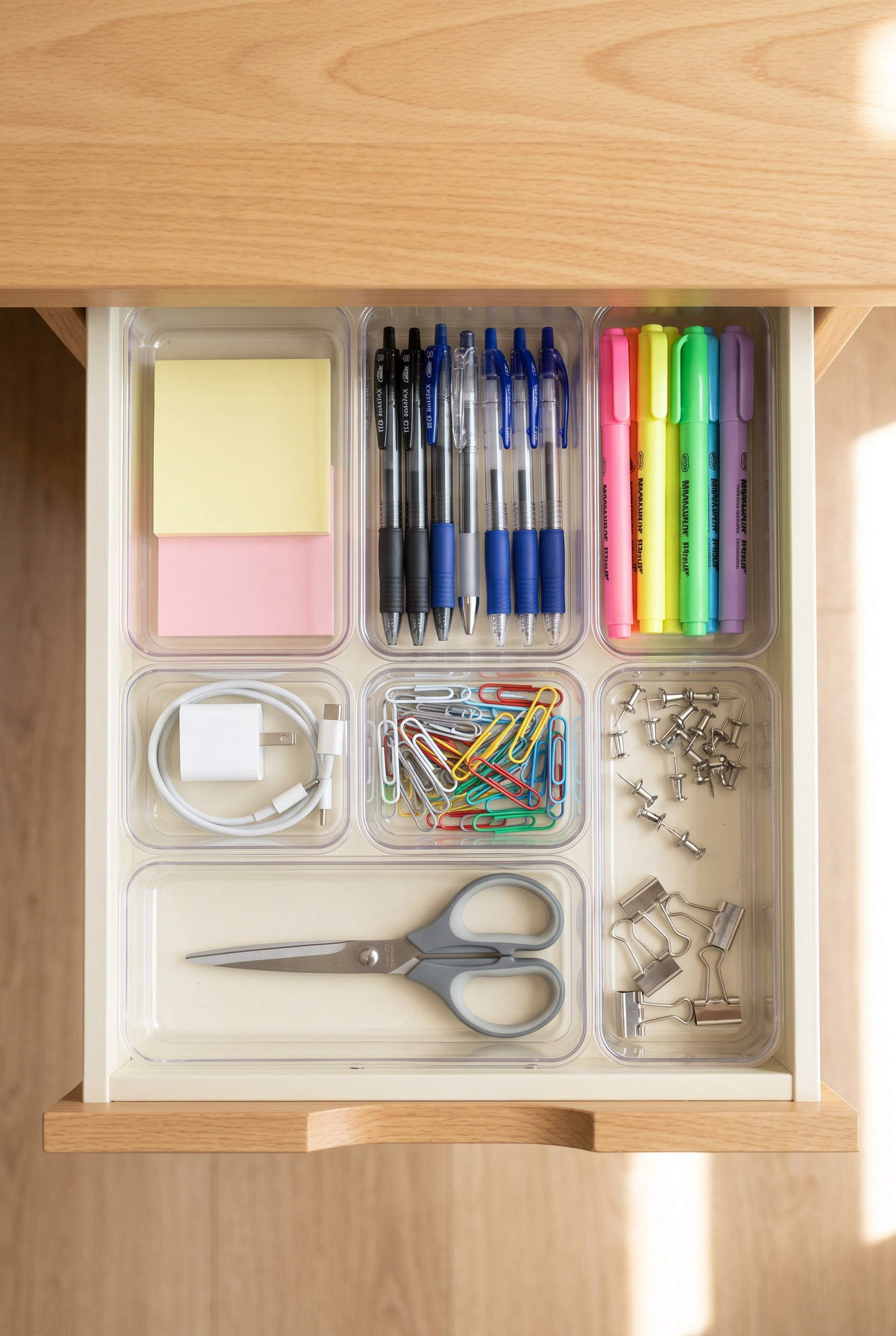
A desk drawer without dividers holds exactly one layer of usable stuff. Everything else sinks to the bottom, gets forgotten, and gets rebought. Meanwhile the items you actually use daily stay on the desk, because retrieving them from the drawer takes too long.
A set of interlocking drawer organizer trays fixes that for very little money. The set includes large, medium and small bins that lock together, so you build the layout around your drawer rather than hoping a fixed tray fits. Twenty-four pieces is more than one desk drawer needs, which means the leftovers go into a nightstand or bathroom drawer.
Measure the interior of the drawer and sketch the layout before you place anything. Group by how often you reach for it, not by category — daily items in the front row, occasional in the middle, rarely in the back. It is a small distinction that determines whether the system survives past week two.
→ Check the Interlocking Drawer Trays on Amazon
The Order to Actually Do This In
Each step changes what you need from the next one, so sequence matters.
- Measure the space, then buy the desk. Depth first, width second.
- Set up the chair with the cushions and sit in it for ten minutes before you buy anything else. If it is unusable, nothing else on this list matters.
- Mount the lamp and the pegboard while the desk is still empty. Both are far easier to position with nothing in the way.
- Route the cables and mount the tray before you place the laptop and monitor riser.
- Add the riser and the drawer trays last, once you know what actually needs to be within reach.
- Use it for a week, then remove whatever you have not touched. That final pass is what separates a setup that looks organized from one that stays organized.
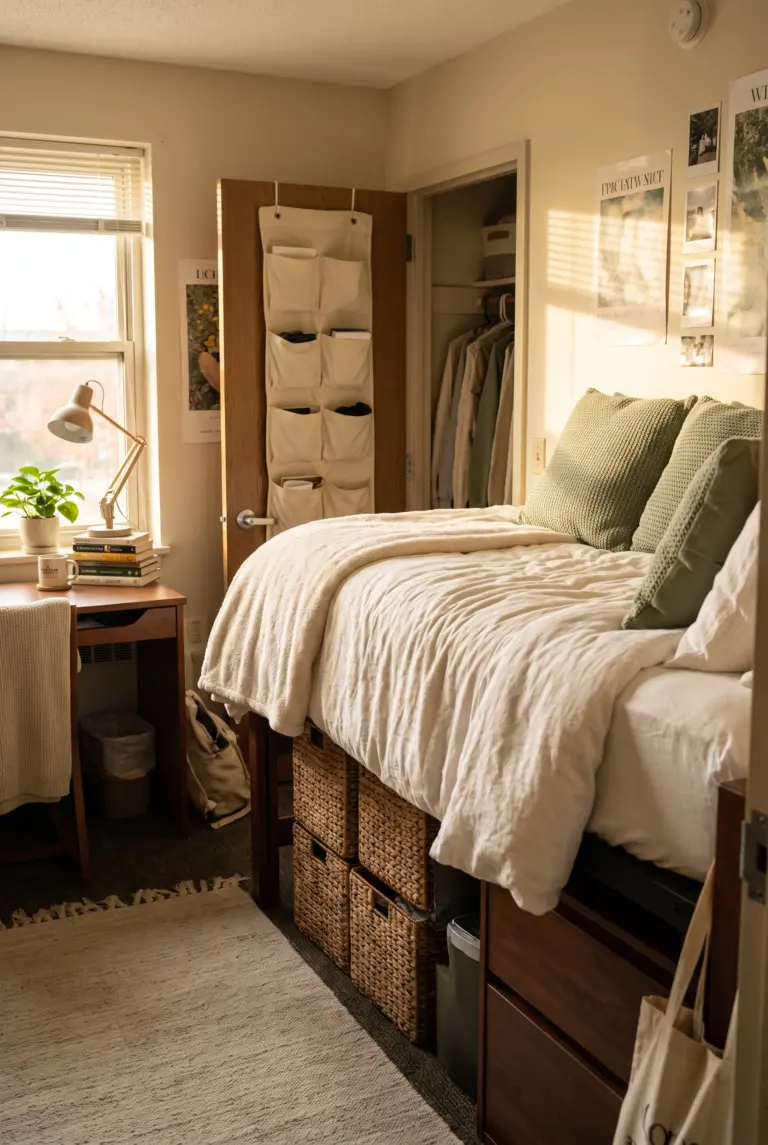
If this is going into a dorm rather than a bedroom at home, the same logic applies but the constraints tighten — no drilling at all, and everything needs to fold flat in May. These dorm room storage ideas cover the rest of the room around the desk.
Small Desk Setup Questions People Actually Ask
What is the ideal desk depth for a small bedroom? Around 16 to 20 inches for a laptop setup. That is deep enough for a keyboard, a notebook and a mug, and shallow enough that the desk does not dominate the room. Go deeper only if you are running dual monitors.
Can I do this without drilling into the walls? Yes, all of it. Clamp lamps attach to the desk, pegboards mount with adhesive strips, and cable trays come in tape-mount versions. Just check the weight rating on any adhesive product before loading it up.
Is a monitor riser worth it if I only use a laptop? Only if you pair it with an external keyboard. Raising a laptop without one moves the keyboard to an uncomfortable height and trades a neck problem for a wrist problem. With a keyboard, it is one of the best ergonomic upgrades available.
How do I keep a small desk from getting cluttered again? Give every category one fixed home — wall, drawer, or riser shelf — and keep one third of the surface permanently clear. Clutter accumulates on desks with no designated empty zone, because there is nowhere for a temporary item to not live.
Where should the desk go in a small bedroom? Perpendicular to the window if possible, so daylight comes from the side rather than behind your screen or directly in your face. Facing a wall is fine and often better for focus, which is where the pegboard earns its place.
Final Thoughts
A good small-bedroom desk setup is not about squeezing more onto the desk. It is about moving as much as possible off it — onto the wall, under the surface, into the drawer, onto the edge of the desk where a clamp can hold it.
Do that and something slightly unexpected happens: a tiny corner starts to feel like a real workspace, and you stop drifting back to the bed with your laptop at nine o’clock. That is the actual goal. Everything above is just how you get there.
Product availability, colors, dimensions, and included components may change. Check the current Amazon listing and measure your space before ordering, and confirm adhesive weight ratings and any rental or housing restrictions before mounting anything.
Small shifts, big vibes.