A Simple No-Equipment Home Workout Routine for Busy Days
Some days, the gym is just not happening. The weather is weird, your schedule is packed, your motivation is somewhere under the laundry pile, and driving anywhere feels like a whole separate workout.
That is where a simple no-equipment home workout routine can be a little lifesaver. You do not need dumbbells, a fancy mat, matching workout sets, or a huge living room. You just need a small bit of floor space, a few minutes, and a routine that feels realistic enough to actually do.
This home workout is beginner-friendly, apartment-friendly, and flexible. You can do it in the morning, during a lunch break, after work, or whenever you need to move your body without making it complicated.
Quick note: always listen to your body. If you are new to exercise, pregnant, recovering from an injury, or dealing with any health concerns, check with a qualified professional before starting a new workout routine.
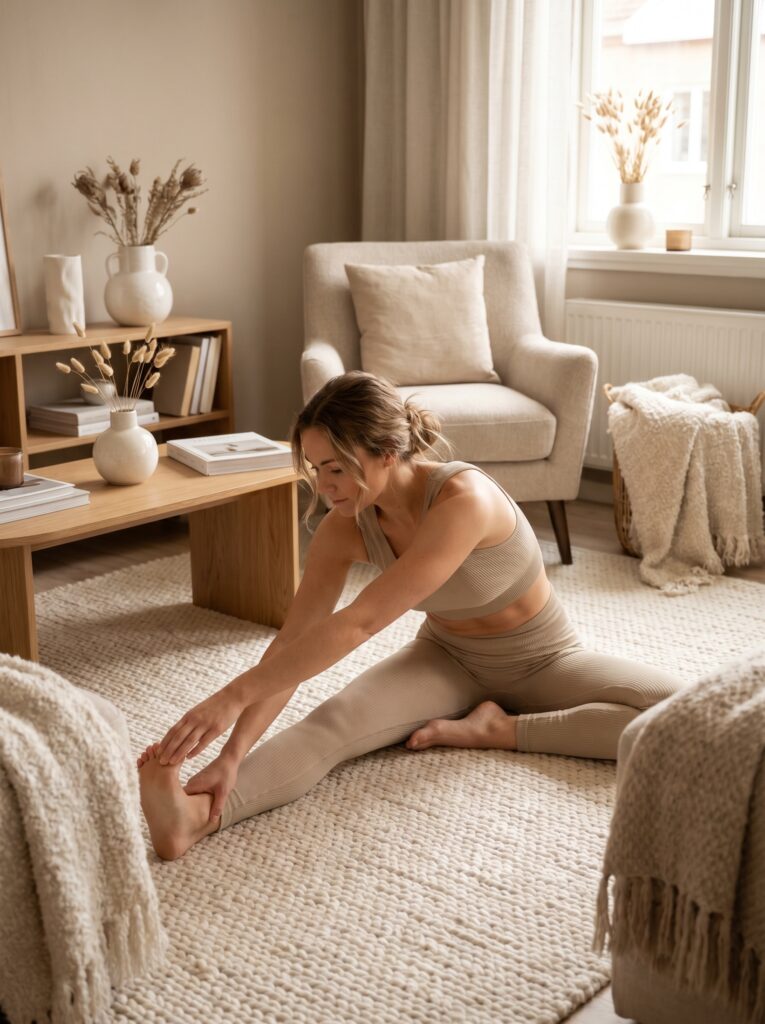
Why No-Equipment Workouts Are So Easy to Stick With
The best workout is not always the most intense one. Sometimes, the best workout is the one you can actually repeat.
No-equipment workouts are perfect for busy days because they remove so many little excuses. No gym bag. No commute. No machines. No waiting for someone to finish using the equipment. You can start exactly where you are.
They are also easy to adjust. If you have more energy, you can add another round. If you are tired, you can slow it down. If you live in an apartment, you can choose low-impact moves without jumping.
Small shifts, big vibes.
The Simple No-Equipment Home Workout Routine
This routine has three parts: a quick warm-up, a full-body circuit, and a gentle cool-down. The whole thing can take about 20 to 25 minutes, but you can make it shorter or longer depending on your day.
How to do it
- Start with the warm-up.
- Do each exercise in the circuit for 40 seconds.
- Rest for 20 seconds between moves.
- Complete 2 to 3 rounds.
- Finish with the cool-down stretches.
If you are a beginner, start with 2 rounds. If you want more of a challenge, do 3 rounds or increase each move to 45 seconds.
Step 1: Quick Warm-Up
Do each warm-up move for about 30 seconds. The goal is not to exhaust yourself. The goal is to wake up your body and ease into movement.
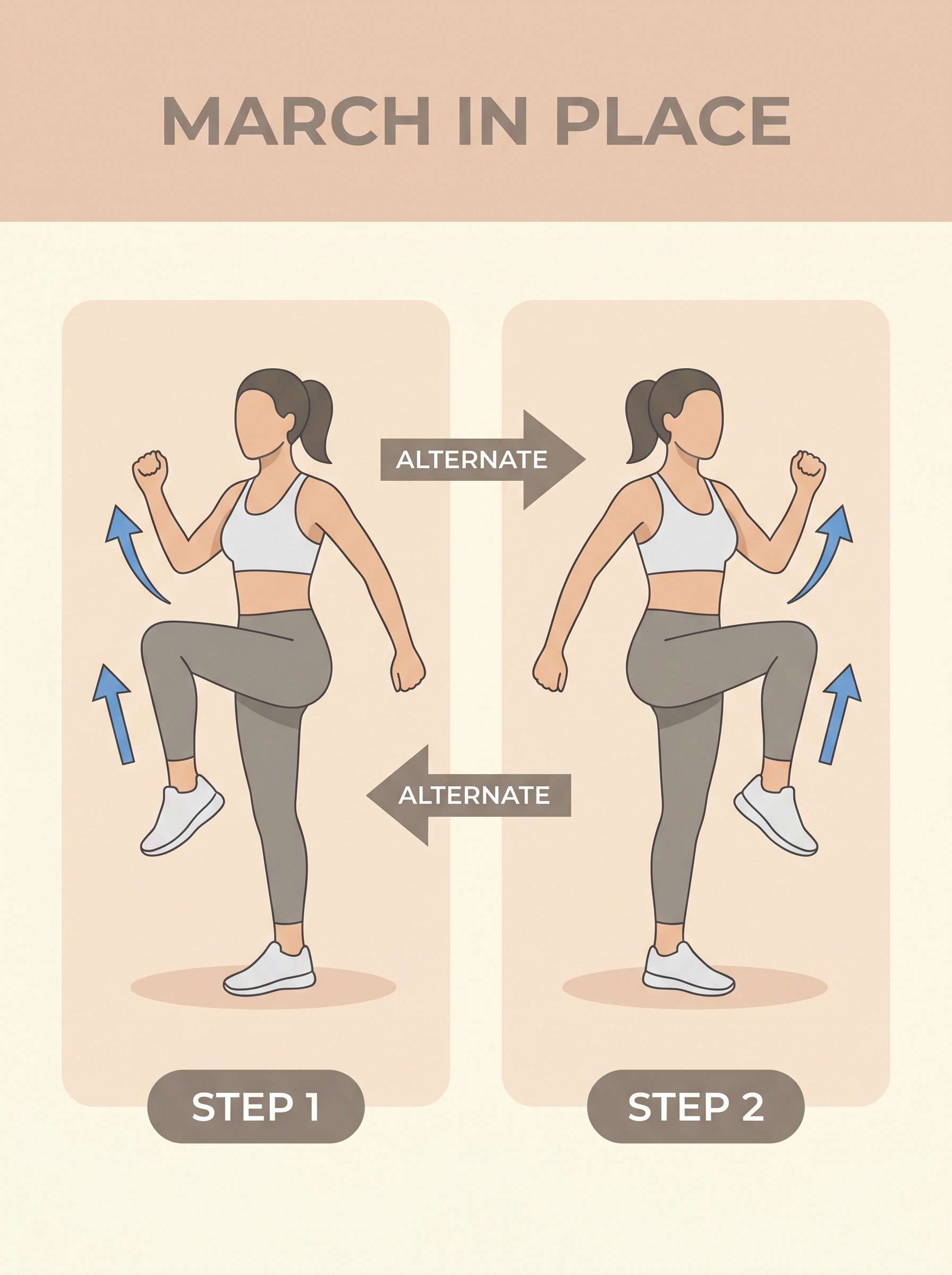
1. March in Place
Stand tall and march in place, swinging your arms naturally. Keep your steps light and steady.
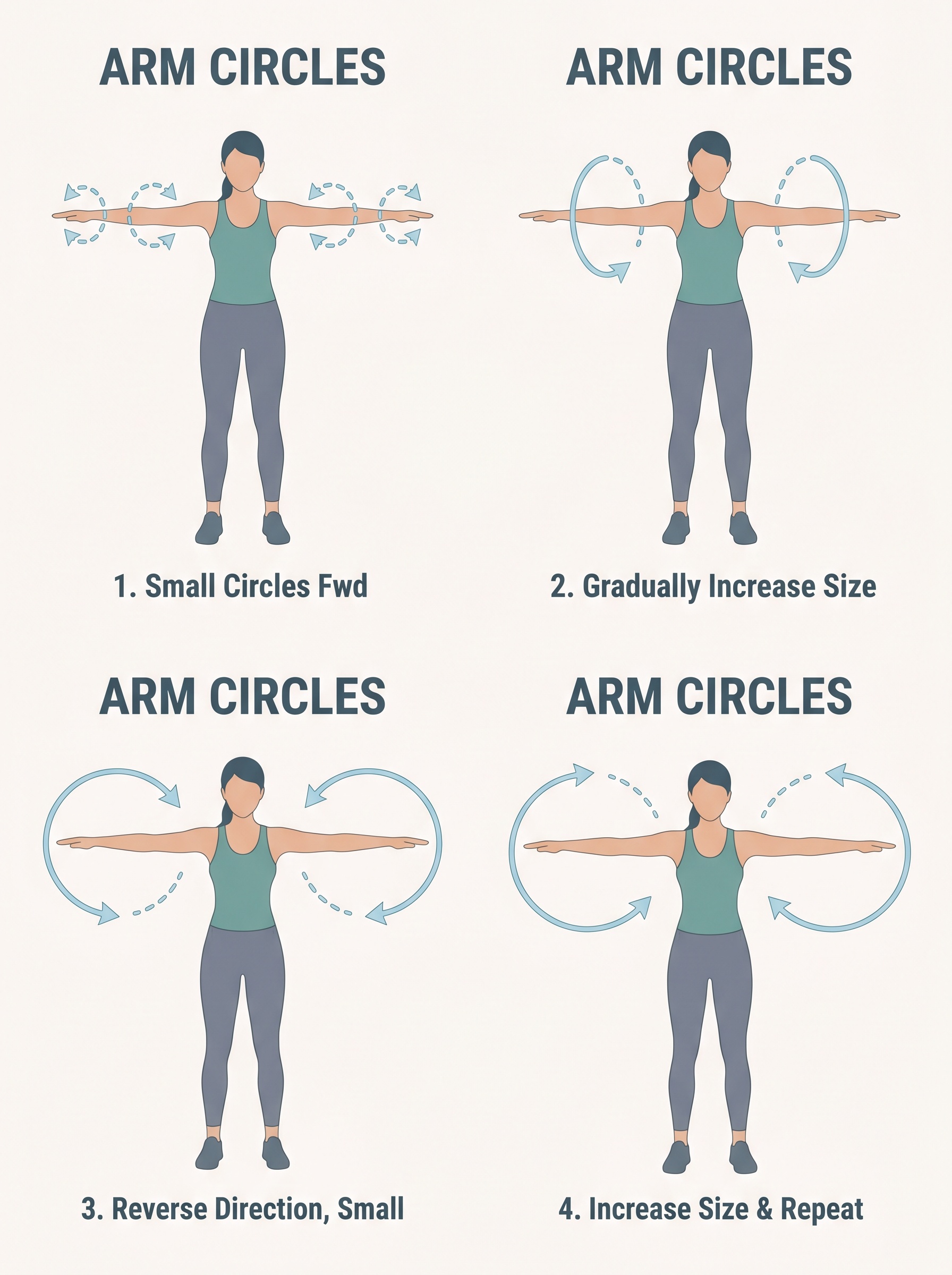
2. Arm Circles
Make small circles with your arms, then slowly make them bigger. Switch directions halfway through.
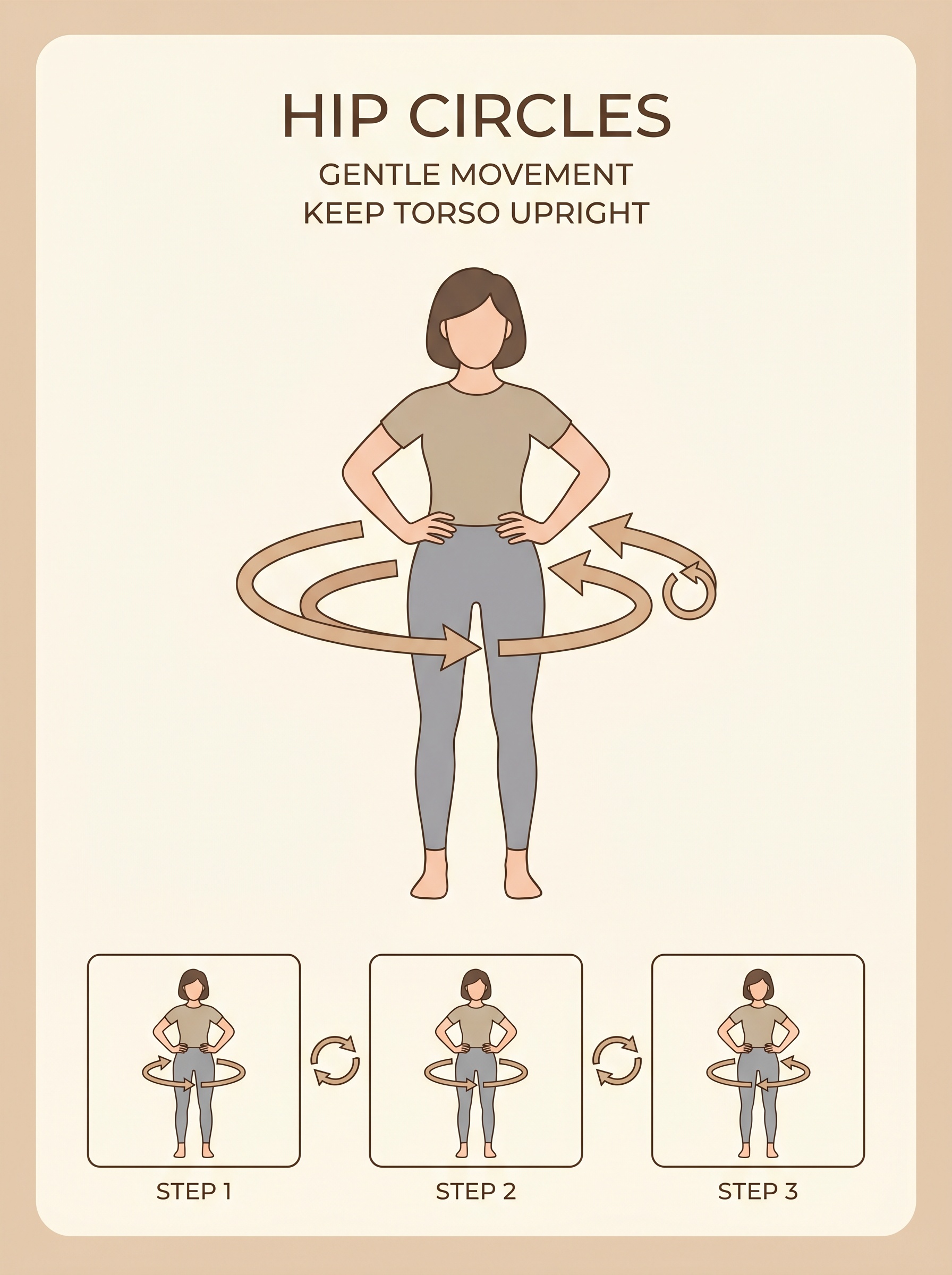
3. Hip Circles
Place your hands on your hips and gently circle your hips one way, then the other. This is especially nice if you have been sitting for a while.
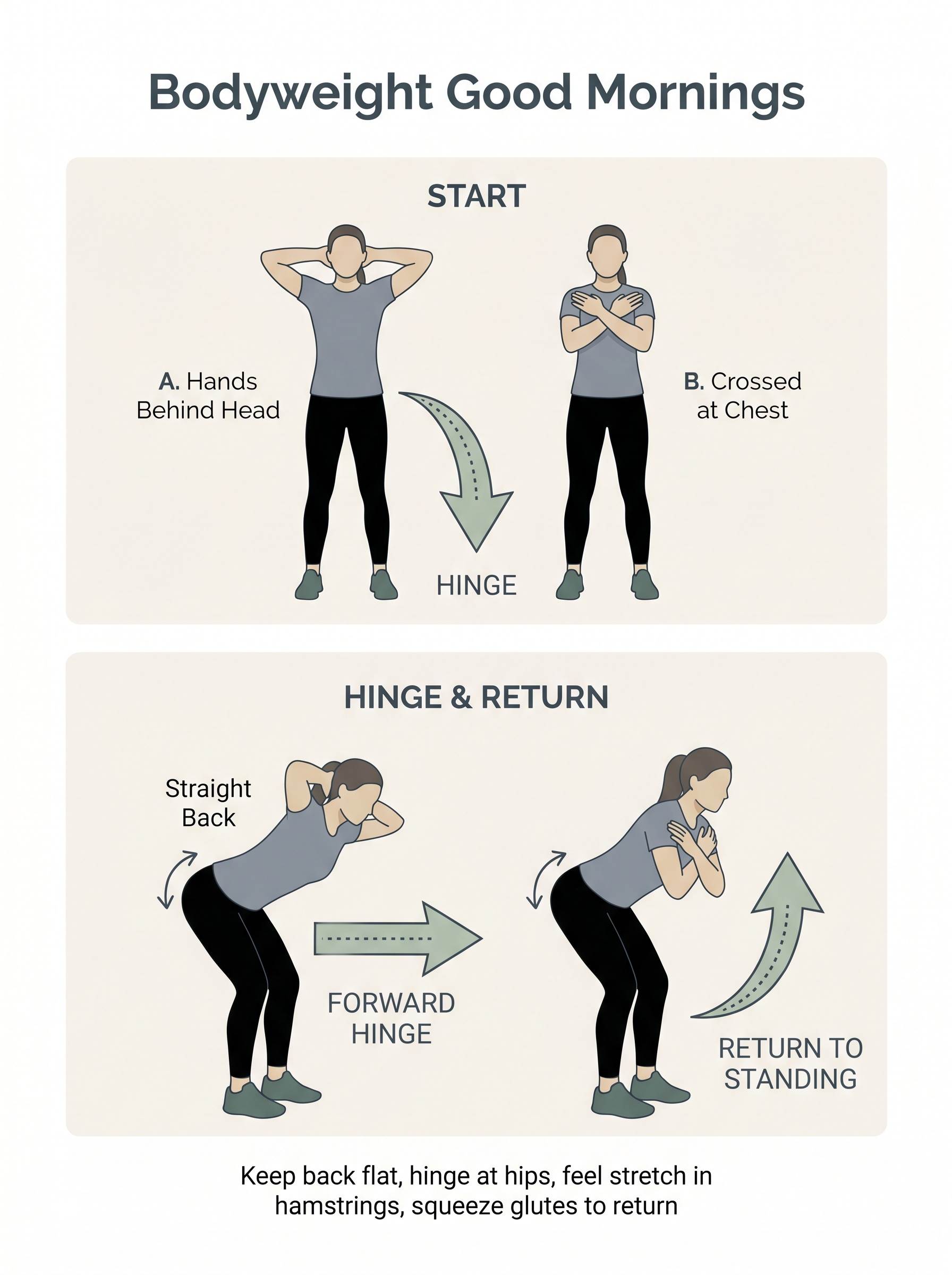
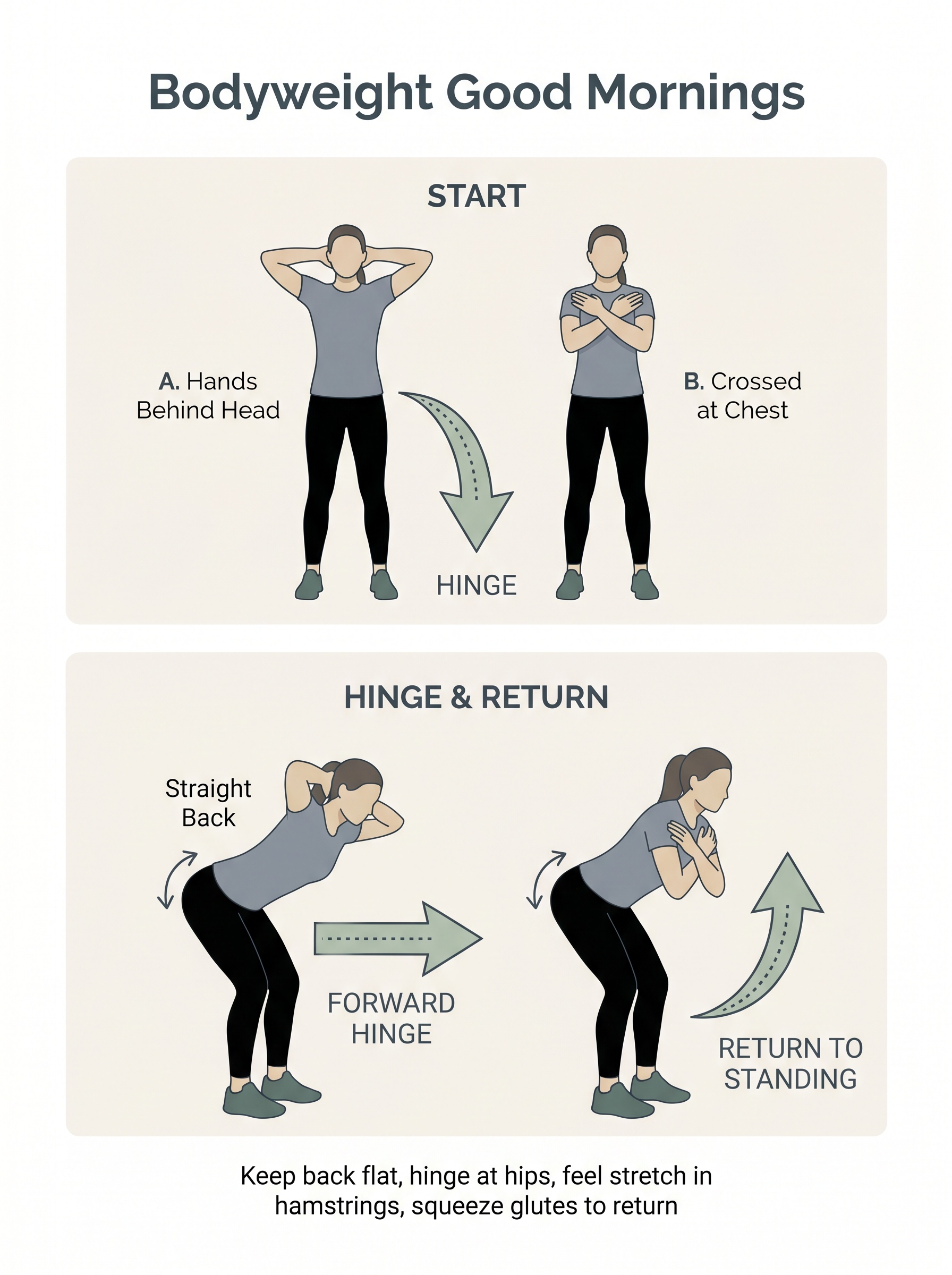
4. Bodyweight Good Mornings
Stand with your feet hip-width apart. Place your hands behind your head or across your chest. Hinge gently at your hips, then return to standing.
Step 2: The Full-Body Home Workout Circuit
This circuit uses simple bodyweight movements to work your legs, core, arms, and glutes. No equipment needed, no complicated choreography, and no fitness-influencer-level coordination required.
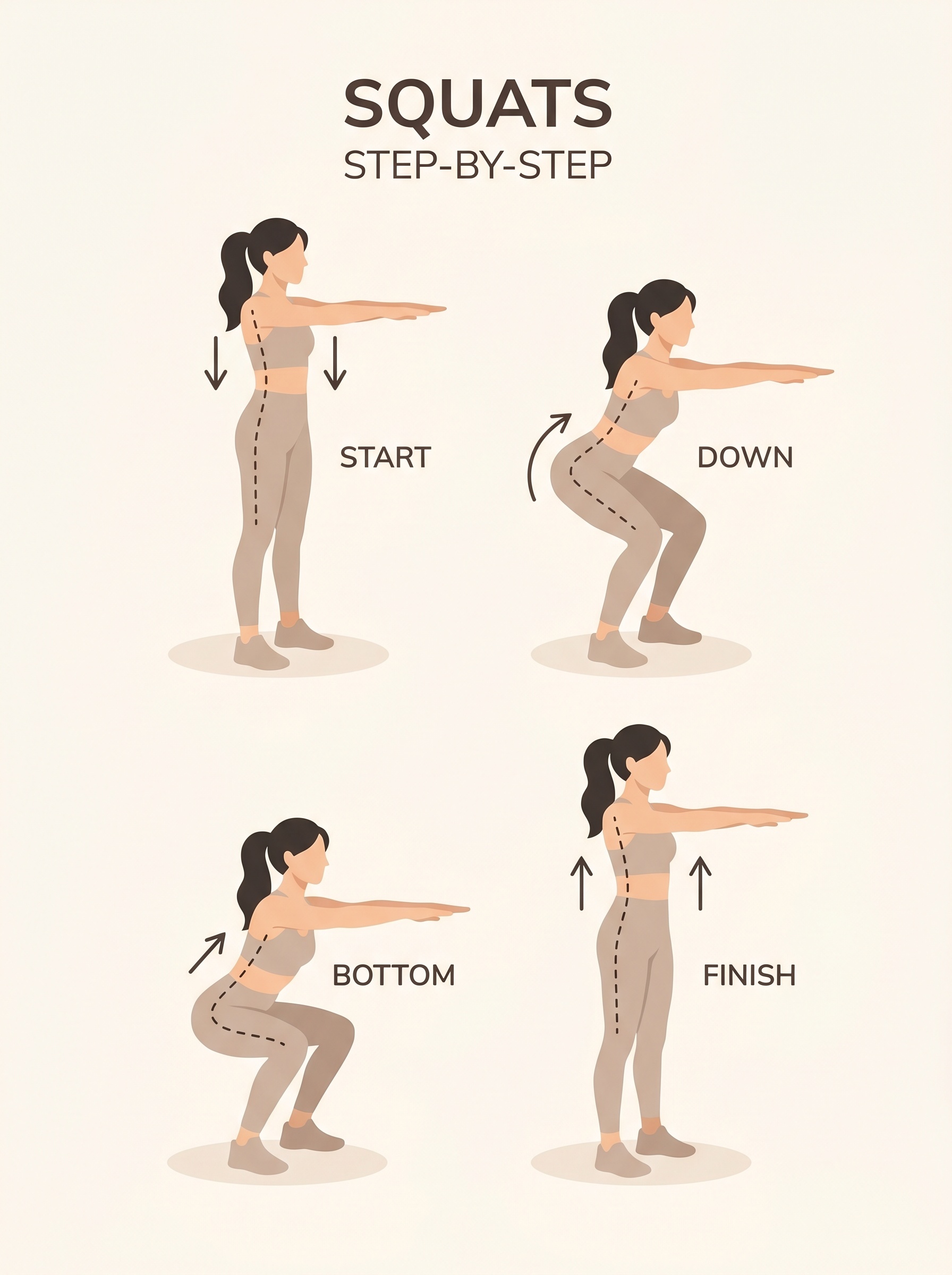
1. Squats
Stand with your feet about hip-width apart. Bend your knees and sit your hips back like you are lowering into a chair, then press through your feet to stand back up.
Make it easier: do smaller squats or sit down onto a chair and stand back up.
Make it harder: slow the movement down or pause at the bottom for one second.
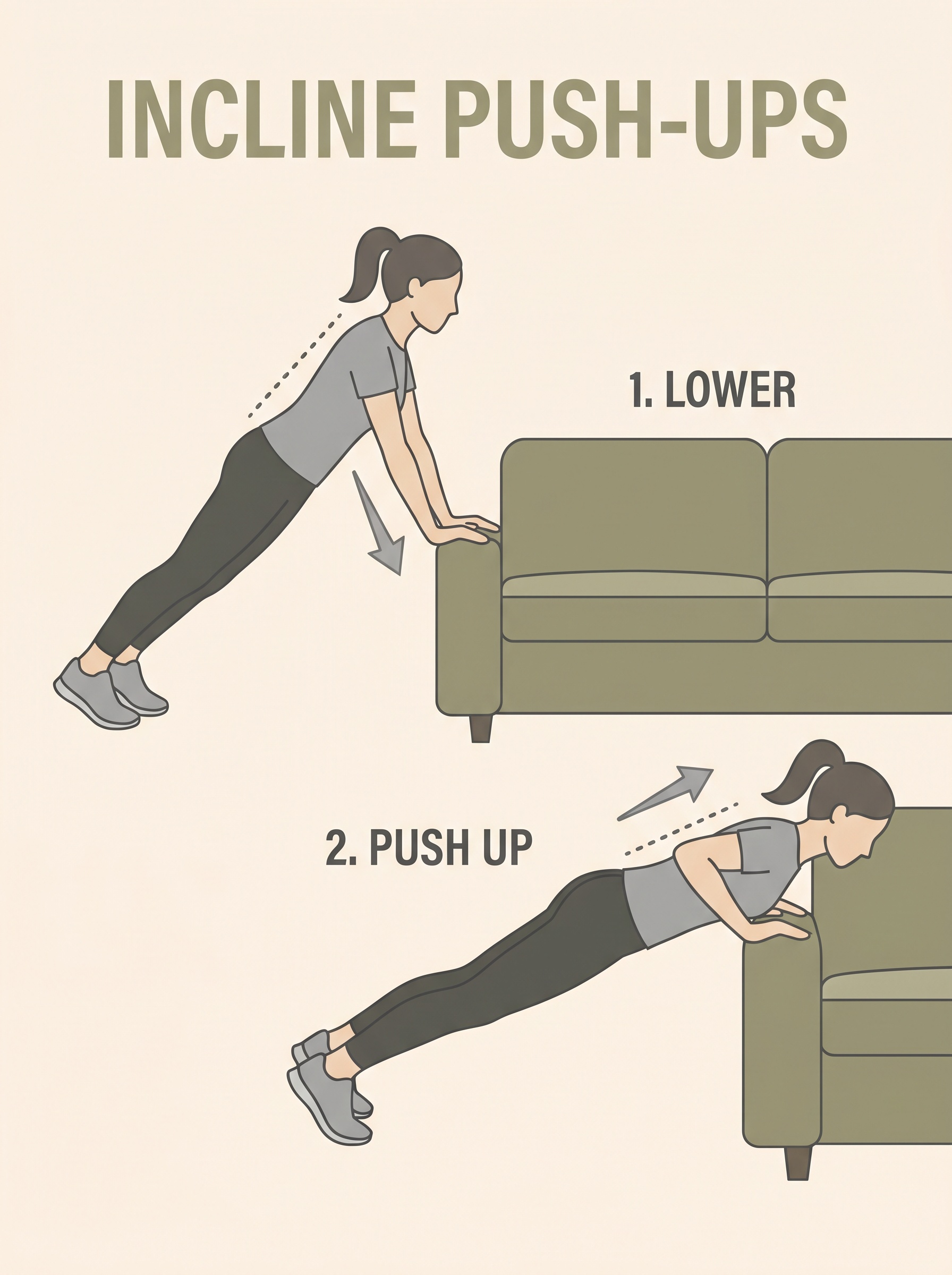
2. Incline Push-Ups
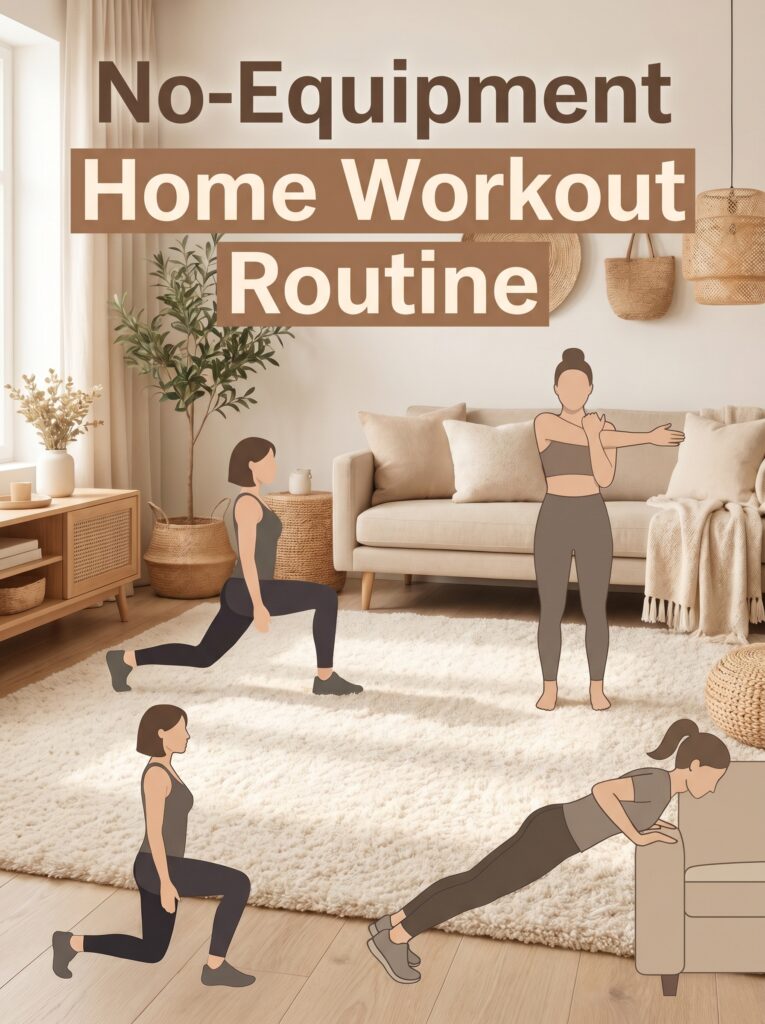
Place your hands on a sturdy countertop, desk, or the edge of a sofa. Step your feet back, keep your body in a straight line, and bend your elbows to lower your chest toward the surface. Push back up.
Make it easier: use a higher surface like a wall or kitchen counter.
Make it harder: use a lower surface or do push-ups from the floor.
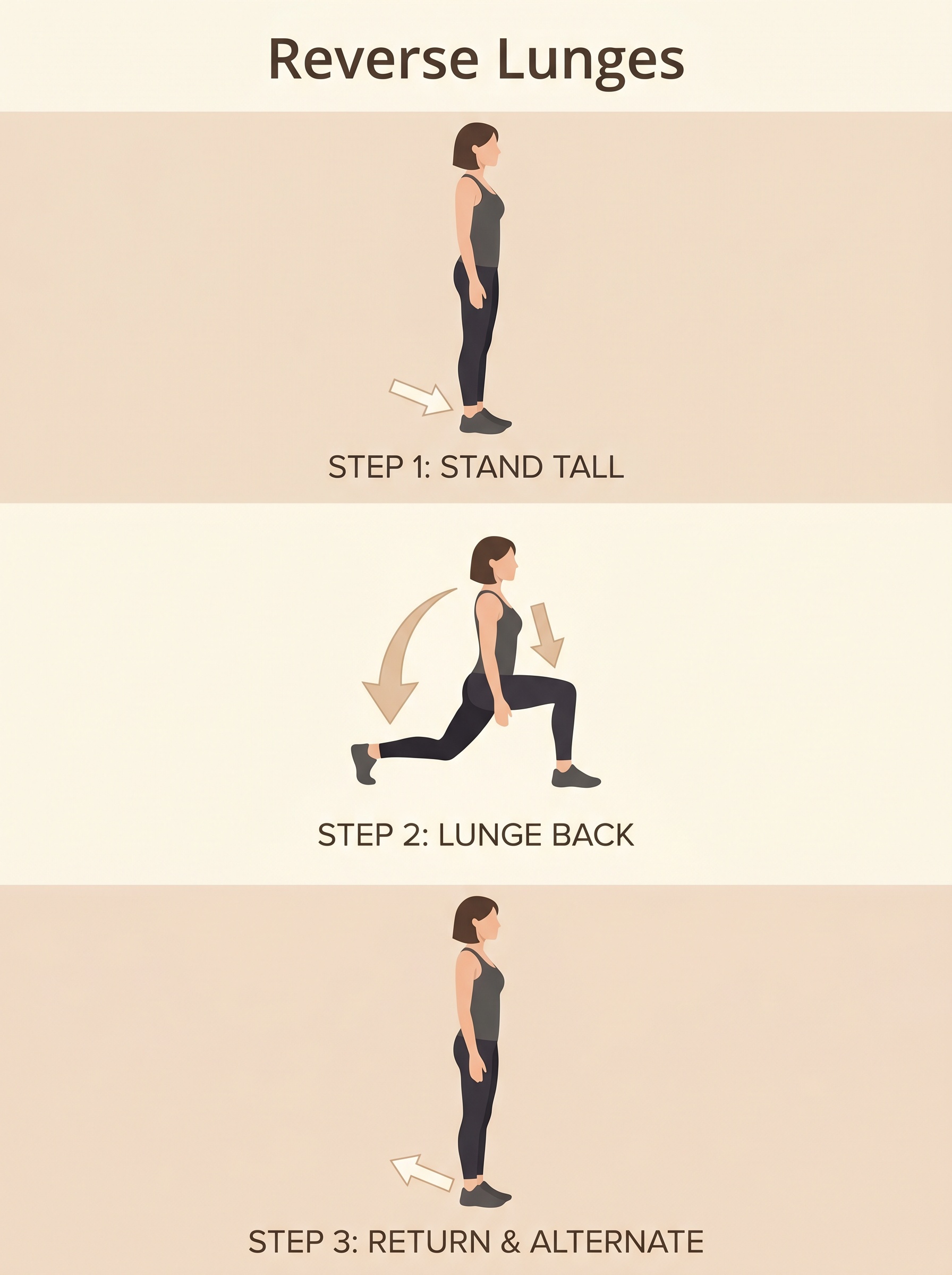
3. Reverse Lunges
Stand tall, step one foot back, and lower into a lunge. Return to standing and switch sides. Move slowly and keep your balance first, depth second.
Make it easier: hold onto a wall or chair for support.
Make it harder: add a slow tempo or a small pulse at the bottom.
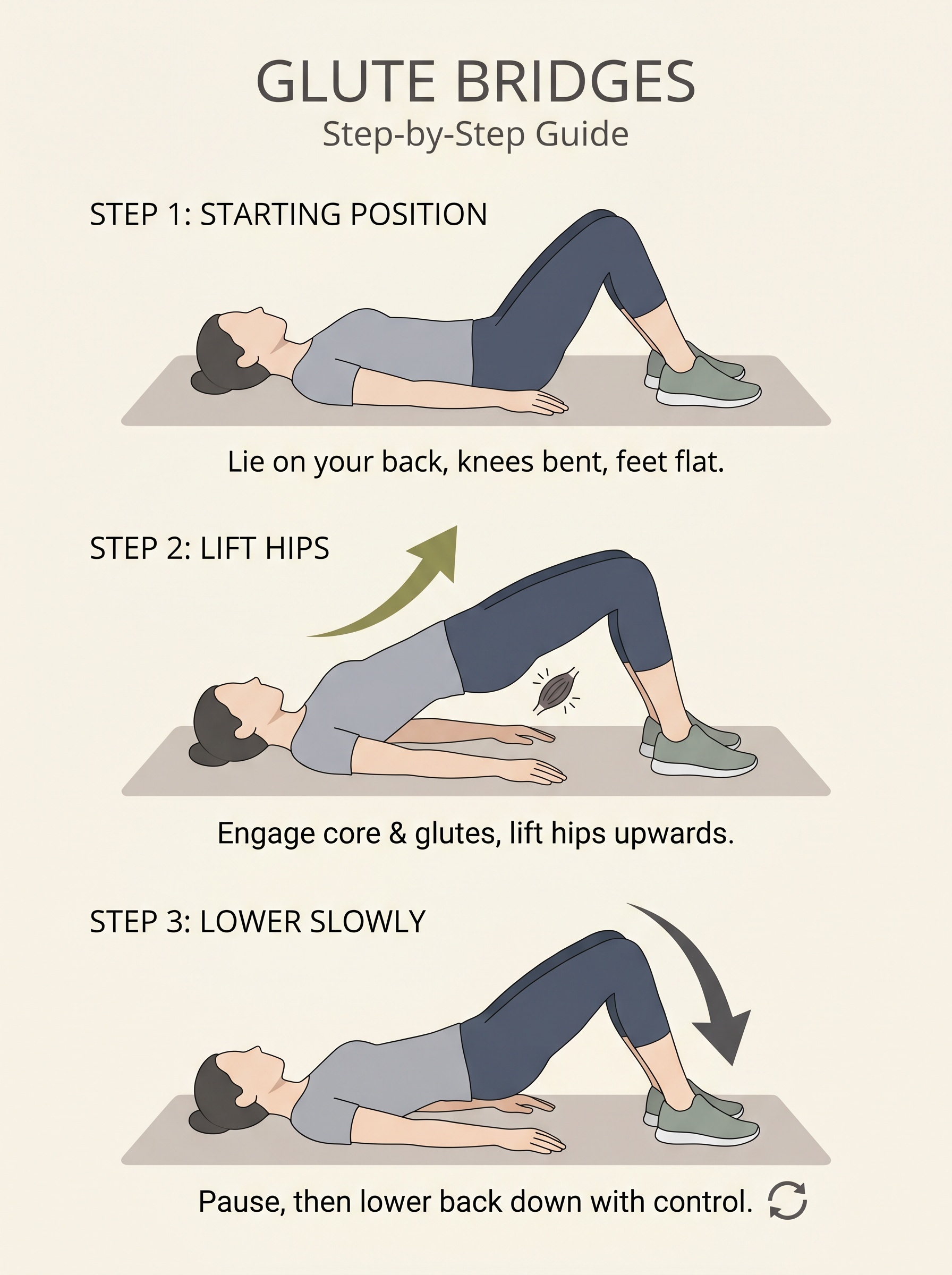
4. Glute Bridges
Lie on your back with your knees bent and feet flat on the floor. Press through your heels and lift your hips, then lower back down with control.
Make it easier: move slowly and focus on control.
Make it harder: pause at the top for two seconds before lowering.
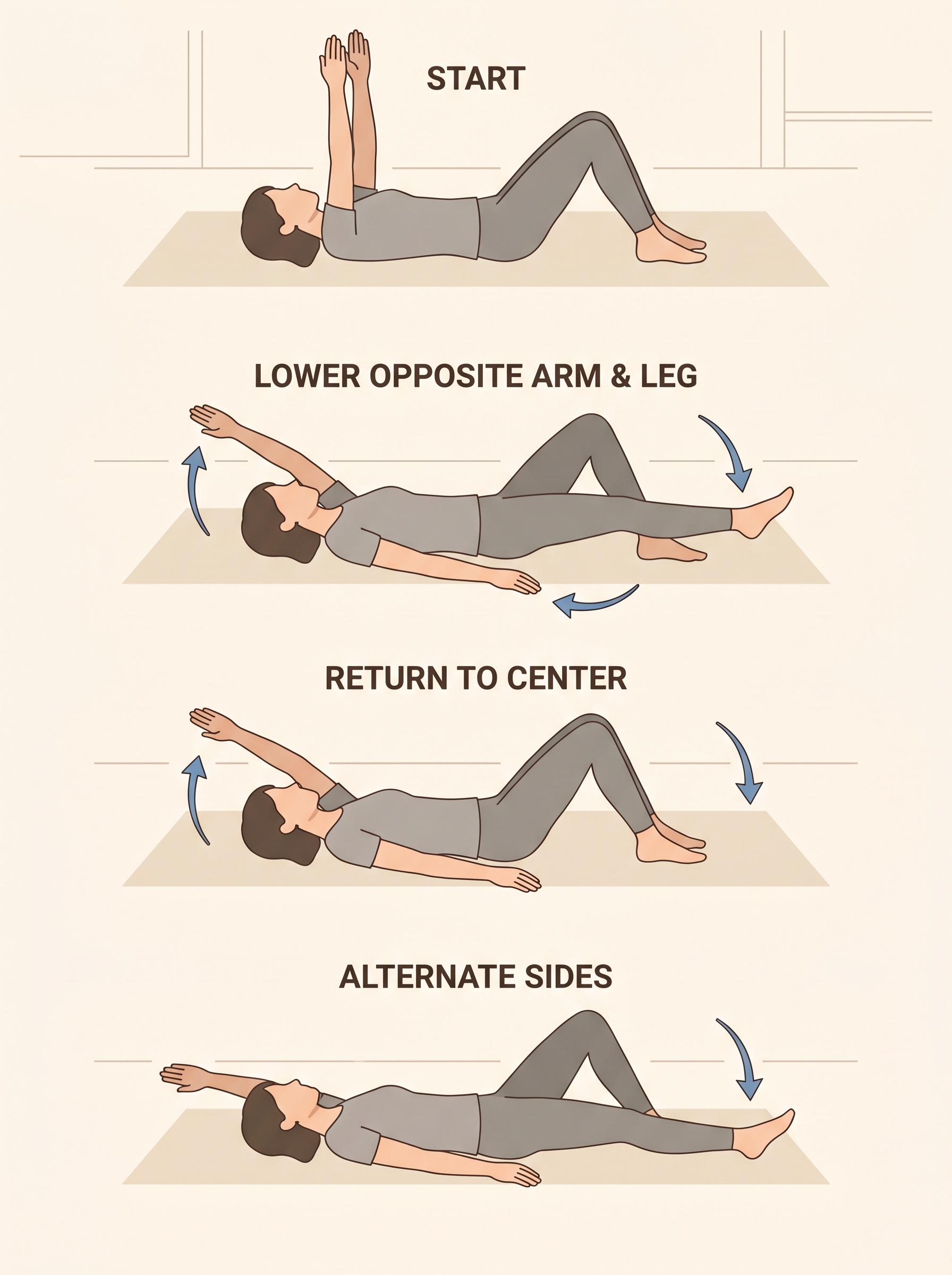
5. Dead Bugs
Lie on your back with your arms reaching up and knees bent over your hips. Slowly lower one arm and the opposite leg, then return to center and switch sides.
Make it easier: move only your arms or only your legs.
Make it harder: slow everything down and keep your lower back gently connected to the floor.
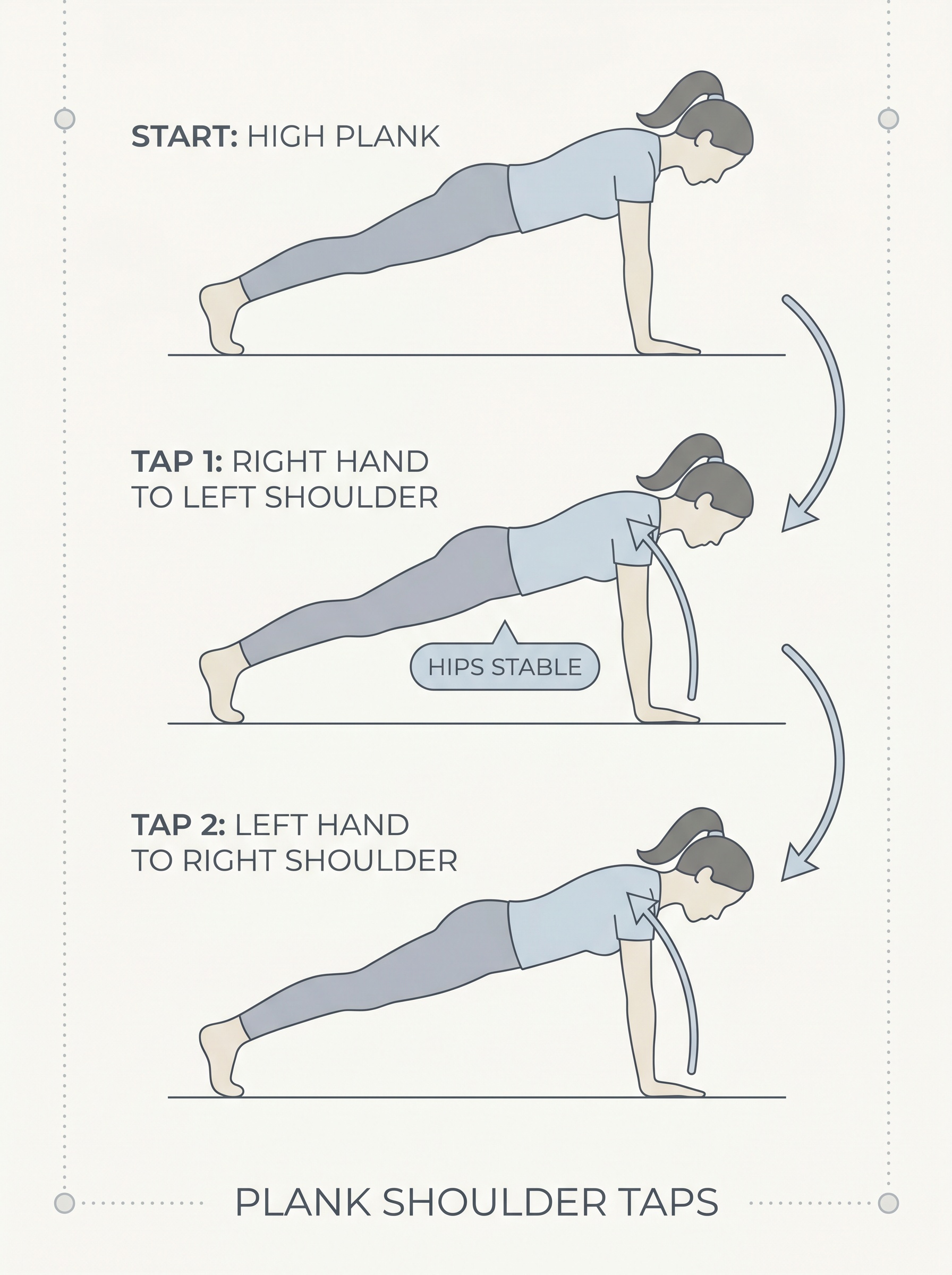
6. Plank Shoulder Taps
Start in a high plank position with your hands under your shoulders. Tap one shoulder with the opposite hand, then switch sides. Try to keep your hips as still as possible.
Make it easier: do this from your knees or with your hands on a countertop.
Make it harder: slow down each tap and widen your feet for control.
Step 3: Gentle Cool-Down
Do not skip the cool-down, even if it is short. A few gentle stretches can make the workout feel more complete and help you transition back into your day.
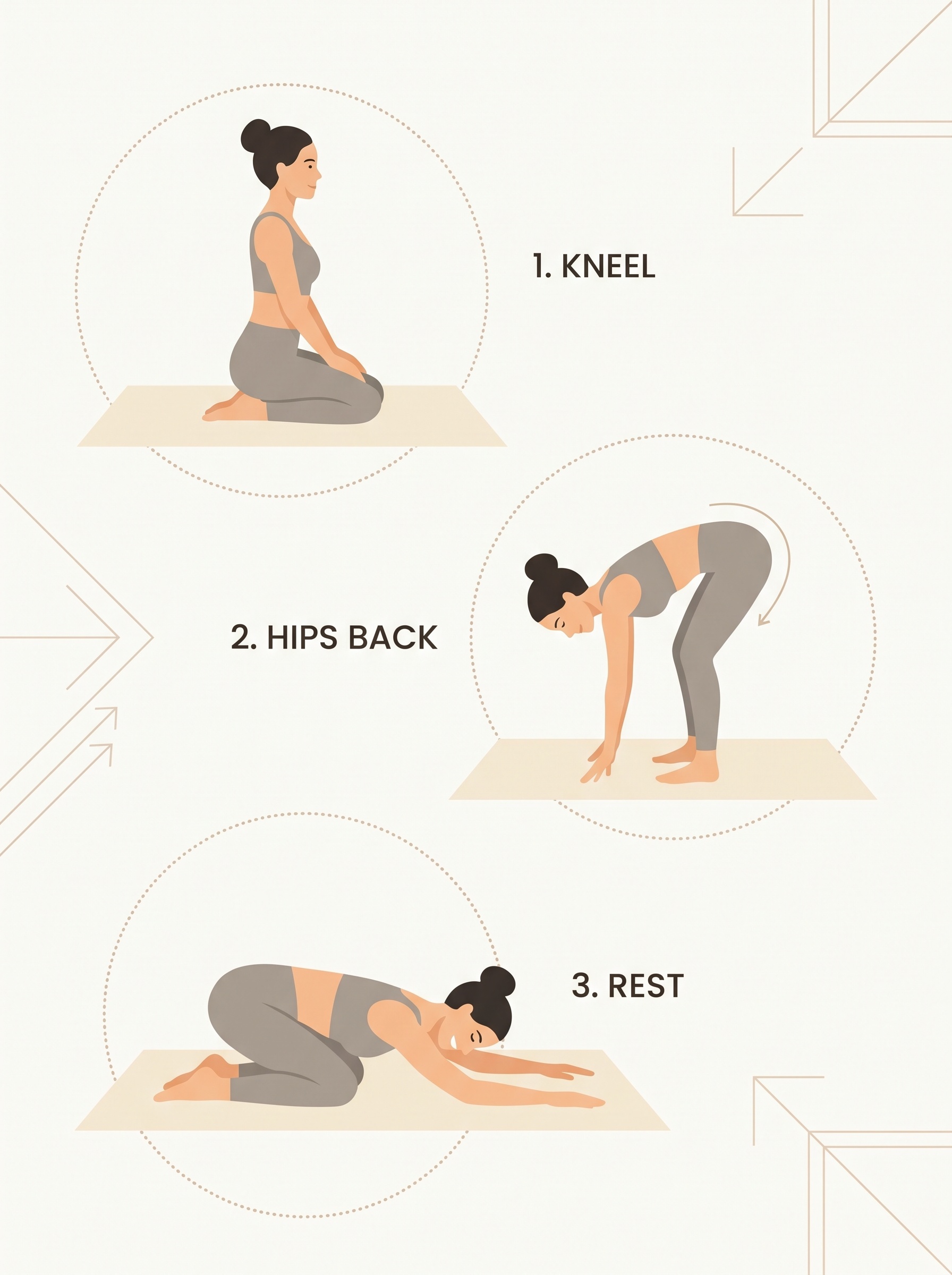
1. Child’s Pose
Kneel on the floor, sit your hips back, and reach your arms forward. Breathe slowly for 30 to 45 seconds.
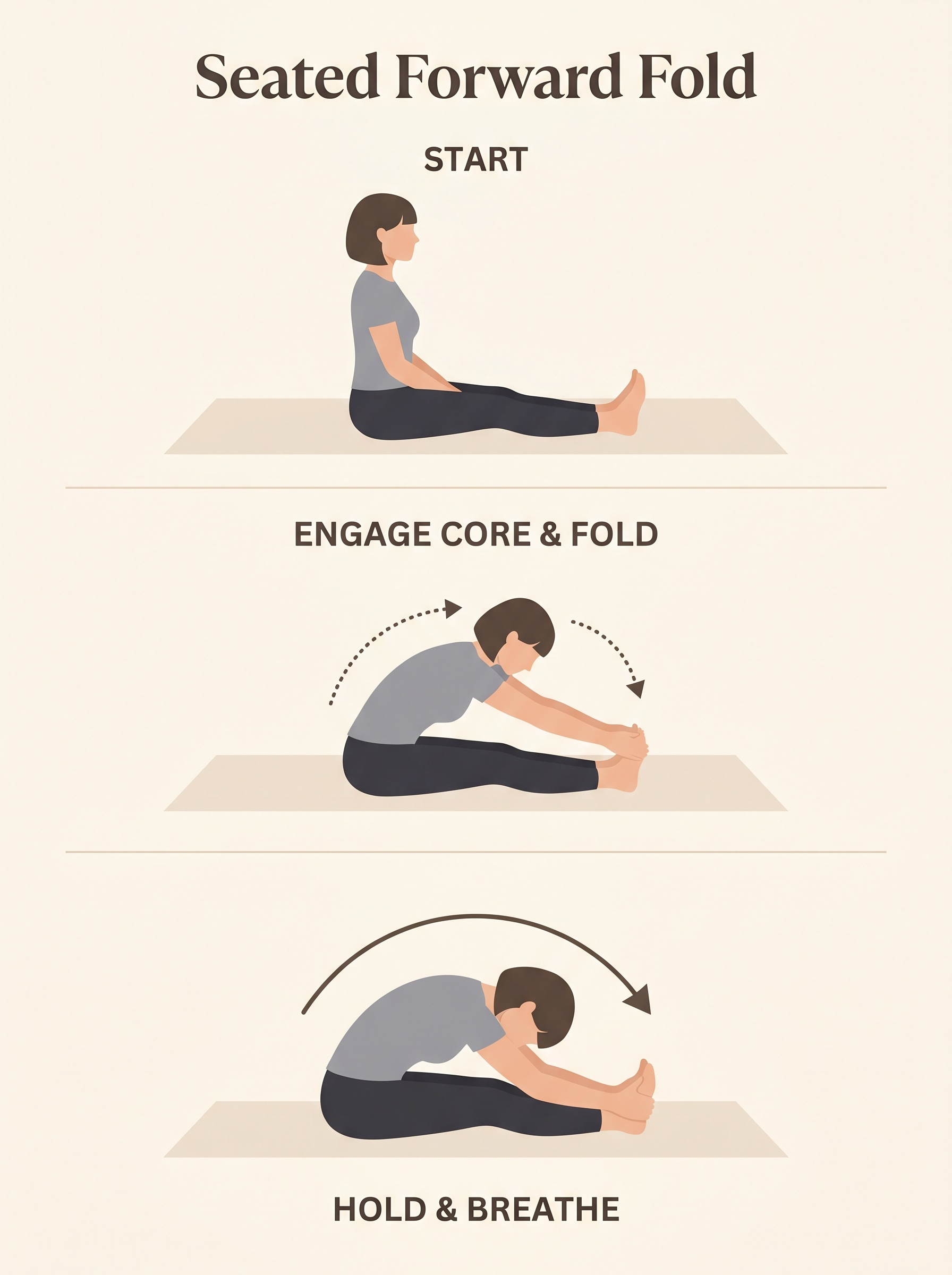
2. Seated Forward Fold
Sit with your legs extended in front of you and gently reach toward your feet. You do not need to touch your toes. Just relax into the stretch.
3. Figure Four Stretch
Lie on your back, cross one ankle over the opposite thigh, and gently pull the leg in toward you. Switch sides.
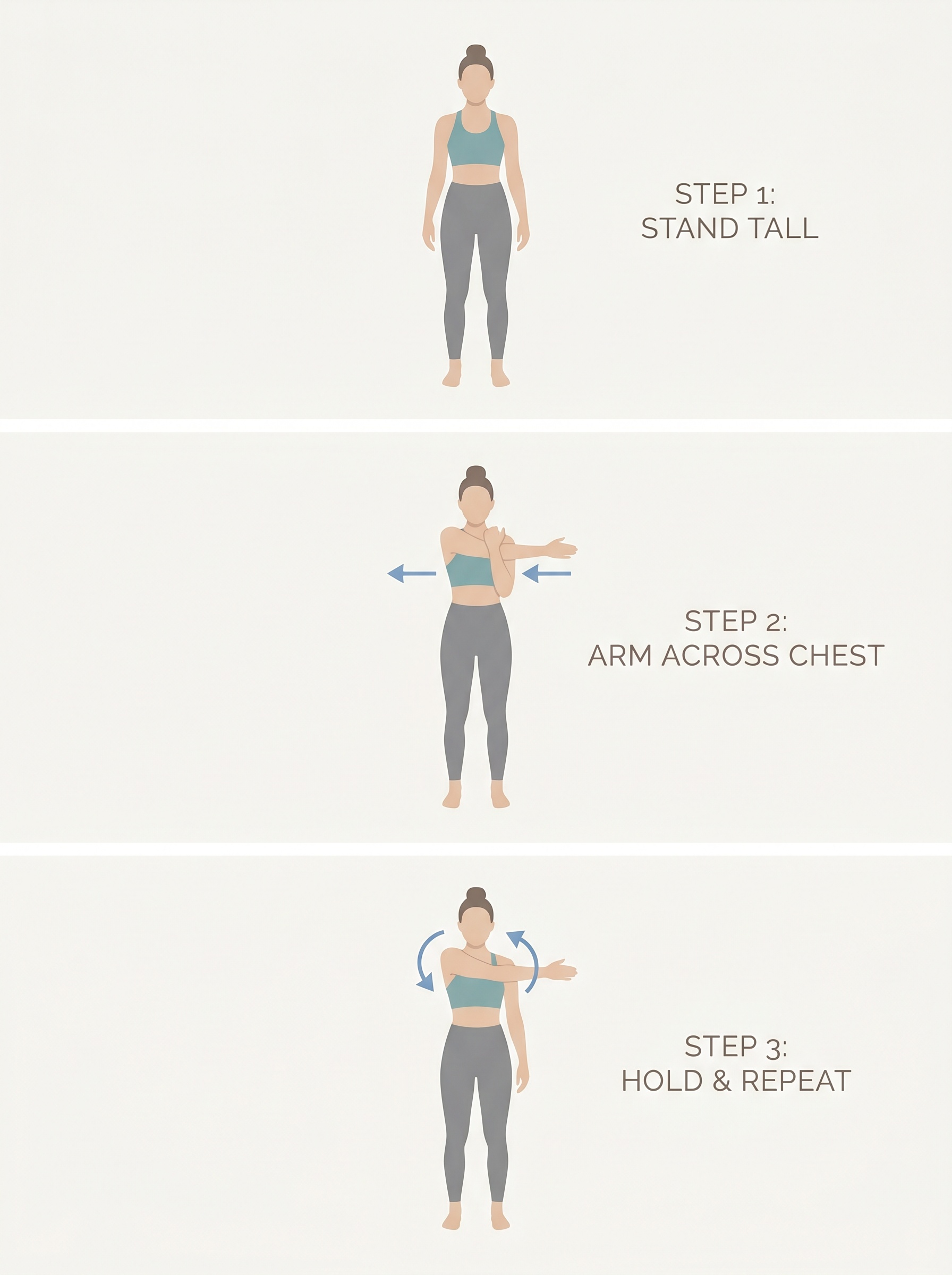
4. Shoulder Stretch
Bring one arm across your chest and gently hold it with the opposite hand. Switch sides.
How to Make This Routine Work for Your Schedule
The easiest way to stick with home workouts is to make them feel almost too simple to skip.
If 25 minutes feels like too much, do one round. If one round feels like too much, do the warm-up and two exercises. It still counts. Building the habit matters more than doing the perfect routine every single time.
- For a 10-minute version: warm up, do one circuit round, and stretch.
- For a 20-minute version: do two circuit rounds.
- For a 30-minute version: do three rounds and take longer rests.
- For low-impact: skip jumping and focus on controlled movement.
A Simple Weekly Home Workout Plan
If you want to turn this into a weekly routine, keep it simple. You do not need to work out every day to feel more consistent.
- Monday: no-equipment home workout
- Tuesday: walk or gentle stretching
- Wednesday: no-equipment home workout
- Thursday: rest or light movement
- Friday: no-equipment home workout
- Weekend: walk, stretch, clean the apartment, or just live your life
Pretty and practical. That is the whole vibe.
Final Thoughts
A no-equipment home workout routine does not need to be intense, aesthetic, or perfect to be worth doing. It just needs to be simple enough to start.
Move your body, take your time, modify what you need, and let it be realistic. A little movement in your living room still counts. Especially on the days when getting started is the hardest part.
Small shifts, big vibes.